Bhutan is a small Himalayan kingdom between India and China, known for its mountain landscapes, Buddhist heritage and strong connection to traditional culture. From the old temples and monasteries of Paro and Punakha to the quiet streets of Thimphu and the high valleys of Bumthang, travelling through Bhutan offers a chance to experience a country where modern life and long-standing traditions continue to exist side by side.
The landscape changes considerably as you travel across the country. Forested valleys rise towards high mountain passes, while traditional villages, prayer flags, dzongs and monasteries appear throughout the journey. For travellers interested in Bhutan tours, the appeal lies as much in the country's culture and way of life as it does in its scenery.
Thimphu, the Capital of Bhutan
Thimphu is Bhutan's capital and the country's main centre of government, commerce and culture. Unlike many capital cities, Thimphu has retained a relatively low-rise character, with traditional Bhutanese architectural features visible throughout the city.
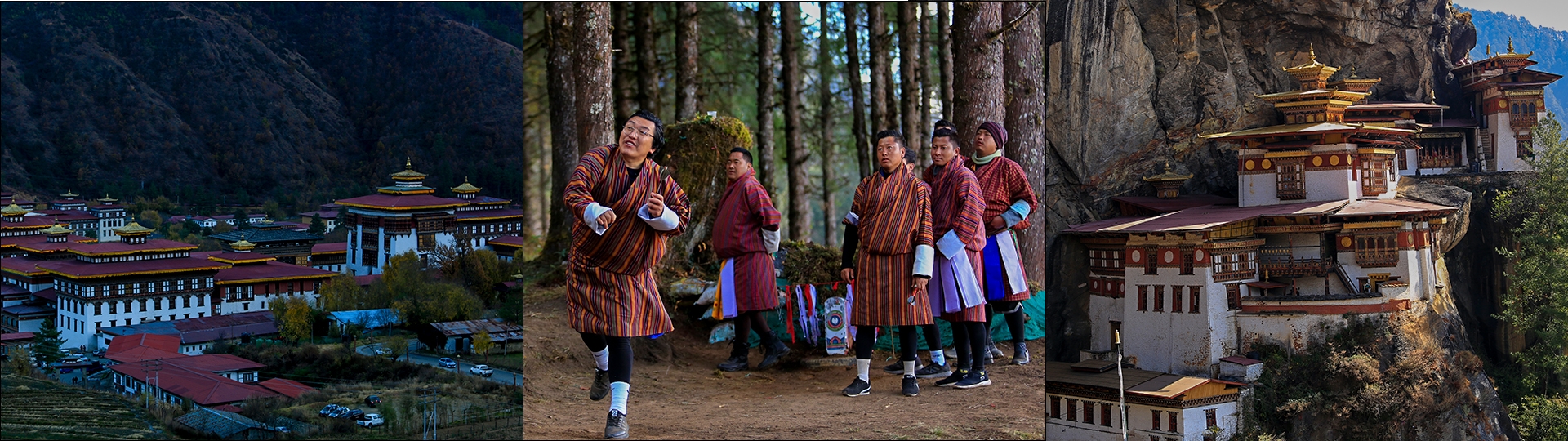
The Tashichho Dzong, a large Buddhist monastery and government complex, is one of the city's most important landmarks. Other places of interest include the National Memorial Chorten, Buddha Dordenma, the Folk Heritage Museum and the weekend market.
Thimphu is also a good place to begin understanding contemporary Bhutan. Traditional dress, Buddhist practices, local food and architecture remain part of everyday life rather than existing solely as attractions for visitors.
Paro and Bhutan's Buddhist Heritage
Paro is home to some of Bhutan's best-known cultural landmarks. The valley is also where most international visitors arrive, with Paro International Airport serving as the country's main international gateway.
One of the most significant sites is Kyichu Lhakhang, one of Bhutan's oldest and most sacred temples. The temple is traditionally believed to have been founded in the 7th century by the Tibetan king Songtsen Gampo and is associated with the establishment of Buddhism in the Himalayan region.
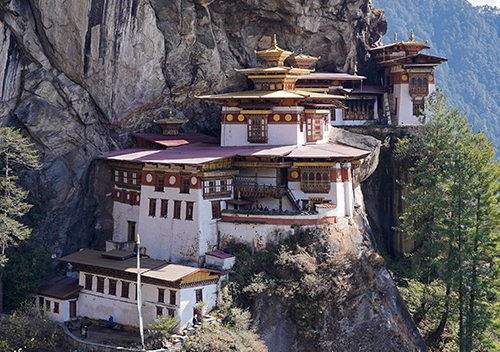
Another famous landmark is Paro Taktsang, better known as Tiger's Nest Monastery. Perched dramatically on a cliff above the Paro Valley, the monastery is one of Bhutan's most recognisable cultural sites. The hike to Taktsang is relatively short compared with a Himalayan trek, but the steep trail and elevation make it a worthwhile half- or full-day excursion.
Punakha and the Valley of the Mo Chhu and Pho Chhu
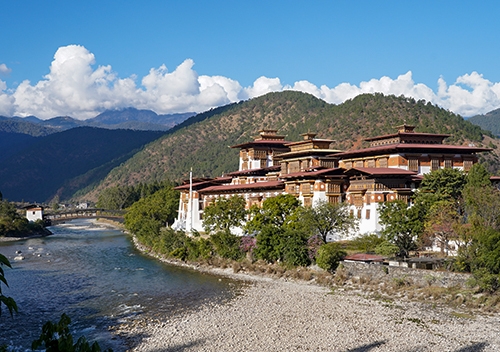
Punakha was once the capital of Bhutan and remains one of the country's most important historical centres. The Punakha Dzong, built at the meeting point of the Pho Chhu and Mo Chhu rivers, is among the finest examples of Bhutanese architecture.
The surrounding valley is warmer than the higher valleys of western Bhutan and is known for its agricultural landscape, particularly rice cultivation. The Dochula Pass, on the road between Thimphu and Punakha, is another popular stop, with its 108 Druk Wangyal chortens and views towards the Himalayan peaks on clear days.
Bhutan and the Himalayas
Bhutan occupies an important part of the eastern Himalayas, with mountains rising well above 7,000 metres along the northern frontier.
Gangkhar Puensum, generally listed at 7,570 metres, is Bhutan's highest mountain and is widely regarded as the world's highest unclimbed mountain. Bhutan has prohibited mountaineering on its high peaks since 2003, following an earlier ban introduced in 1994 on climbing mountains above 6,000 metres because of their spiritual significance.
This means that Bhutan's mountains are not primarily destinations for conventional mountaineering. Instead, travellers experience the Himalayan landscape through trekking routes, mountain passes and remote valleys.
Bhutan's Natural Environment
Bhutan has maintained a remarkably high level of forest cover and places considerable importance on environmental conservation. Much of the country remains forested, with ecosystems ranging from subtropical forests in the south to alpine environments in the north.
The country is home to wildlife including takin, red panda, Himalayan black bear, snow leopard, golden langur and several species of pheasant. The Himalayan takin is Bhutan's national animal and has a particularly important place in Bhutanese folklore.
Protected areas cover a substantial part of the country, and several of them are connected through biological corridors. This allows wildlife to move between different habitats across Bhutan's varied elevations.
Bhutan's Approach to Tourism
Bhutan has developed a distinctive tourism model often described as “high value, low volume.” The intention is to manage tourism in a way that protects the country's environment, culture and heritage while ensuring that tourism contributes meaningfully to the economy.
However, the way Bhutan's tourism system works has changed over time. Visitors are no longer subject to the old system in which a single daily package price automatically covered accommodation, meals, transport and a guide.
Bhutan introduced a Sustainable Development Fee (SDF) as part of its current tourism policy. The fee is separate from the actual cost of accommodation, transportation, meals and other travel services. Its amount and applicable rules can change, so travellers should check the current requirements when planning their trip.
This regulated approach means that a Bhutan tour is generally planned in advance, with licensed local tourism services forming an important part of the journey.
Best Time to Visit Bhutan
The best time to visit Bhutan depends on what you want to experience.
Spring, from March to May, is one of the most popular seasons. The valleys become greener, rhododendrons bloom, and the weather is generally favourable for sightseeing and trekking.
Autumn, from September to November, is another excellent period, particularly for clear mountain views and trekking. The weather is generally dry, and the skies can be exceptionally clear.
The summer monsoon brings more rainfall, especially between June and August, which can affect road travel and visibility. Winter is colder, particularly at higher elevations, but the lower valleys can still be pleasant and quieter.
For travellers interested in trekking, the route and altitude should be considered alongside the season rather than relying on one “best time” for the entire country.
Bhutanese Culture and Everyday Life
Bhutan's culture is closely connected with Tibetan Buddhism, and monasteries, dzongs, prayer flags and religious festivals remain an important part of everyday life.
Traditional Bhutanese clothing is still commonly worn, particularly in formal and official settings. The country's distinctive architecture is also protected through building regulations, giving towns and villages a visual character that is quite different from neighbouring countries.
Bhutanese festivals, known as tsechus, are particularly colourful occasions featuring masked dances, music and religious performances. Attending one can offer a deeper understanding of Bhutan's religious traditions, although festivals are also important events for local communities rather than performances created solely for tourists.
Places to Visit in Bhutan
A Bhutan itinerary can be built around several destinations depending on the time available.
- Paro is known for Taktsang Monastery, Kyichu Lhakhang and the country's international airport.
- Thimphu offers a closer look at contemporary Bhutan, its institutions, markets, monasteries and traditional culture.
- Punakha is known for its historic dzong, fertile valley and warmer climate.
- Gangtey and Phobjikha Valley are famous for their open landscape and seasonal arrival of black-necked cranes.
- Bumthang offers a quieter experience of central Bhutan, with ancient temples, monasteries and traditional villages spread across several valleys.
Travellers with more time can explore eastern Bhutan, where the landscape becomes increasingly remote, and tourism infrastructure is less developed.
Travel to Bhutan with Footprint Adventure
At Footprint Adventure, we organise Bhutan tours, cultural journeys, trekking experiences and customised Bhutan travel itineraries for travellers who want to explore the country at a comfortable pace.
Depending on your interests, a journey can include the cultural landmarks of Paro and Thimphu, the historic valley of Punakha, a hike to Tiger's Nest, traditional festivals, village experiences, Himalayan trekking or time in the quieter valleys of central Bhutan.
Bhutan is not a destination that needs to be rushed. Its monasteries, mountain roads, villages and valleys are best experienced with enough time to stop, look around and understand the places you are passing through.
For travellers looking for a Himalayan journey shaped as much by culture and landscape as by adventure, Bhutan offers a very different experience from the more familiar trekking destinations of Nepal.