History of Patan Durbar Square
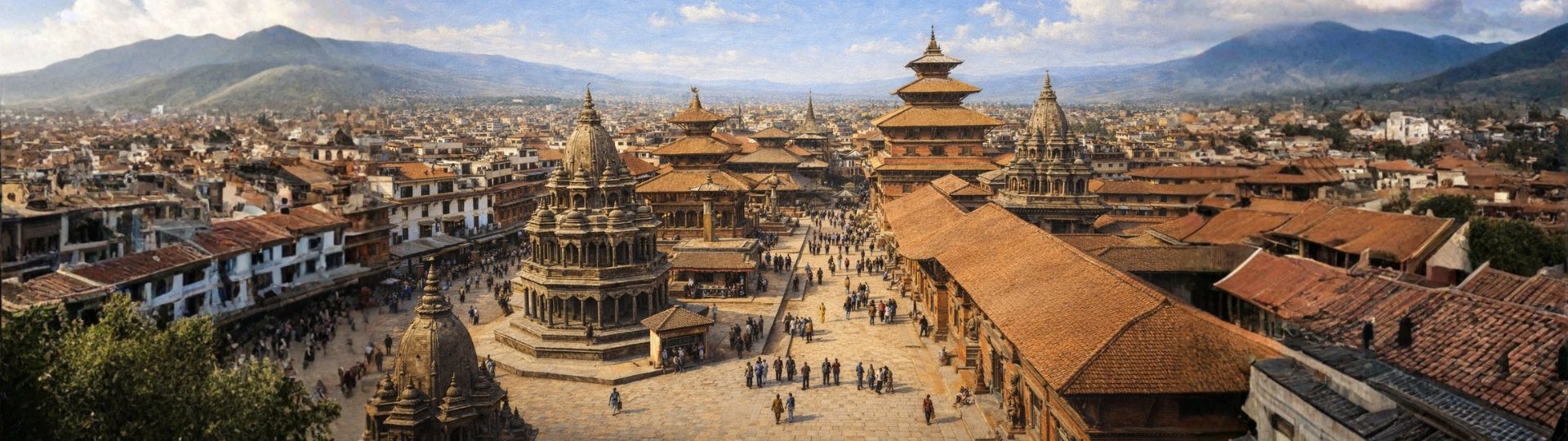
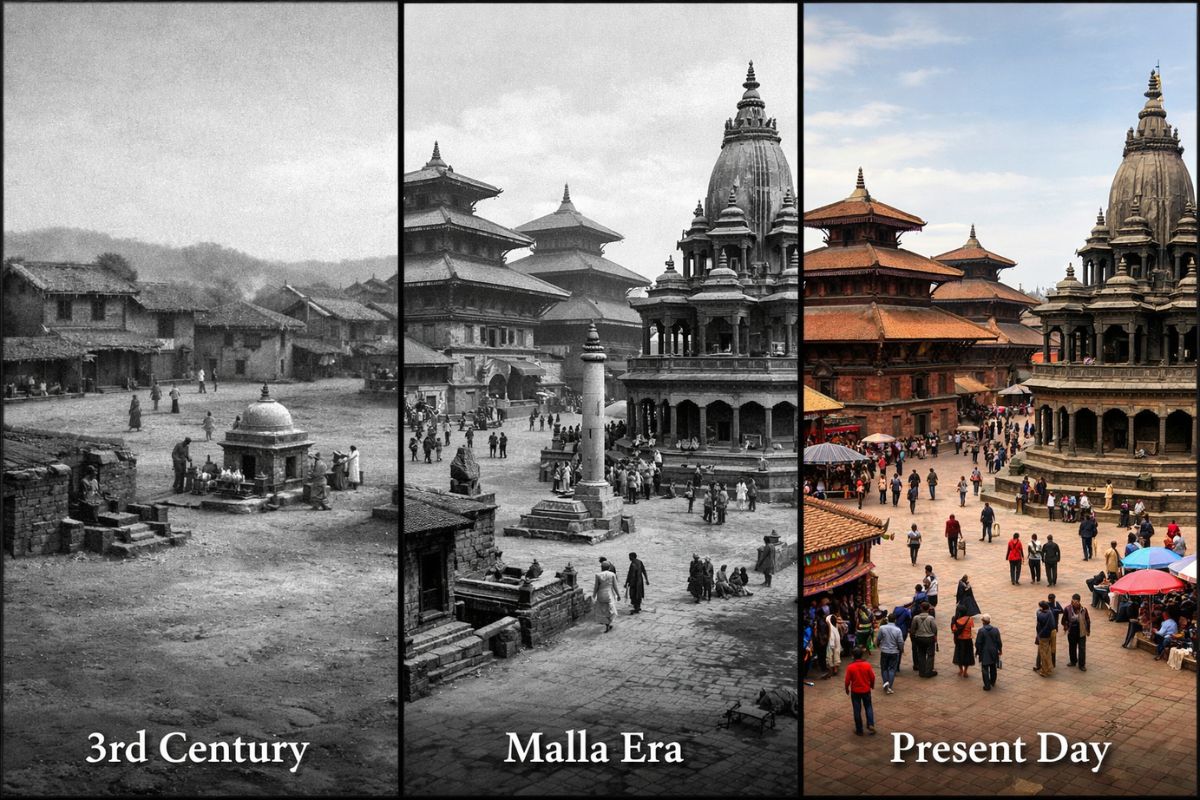
Patan is believed to be one of the earliest settlements in Kathmandu, with a history dating back to the 3rd century BC. It was believed that Patan was founded as an early Buddhist settlement even before the Christian era (5 BC). Various names have been attributed to this historical site, such as Lalitpur, Yal, Lalitapuri, and Maningal. According to local history, Yal is associated with Yalambar, the First Kirat King, and it was established as a capital even before the Licchavi rule.
The Lichhavi era marked the period of expansion for this settlement, which later came to be known as Yupagram. According to Buddhist tradition, Emperor Asoka of Magadha visited this valley with his daughter, Charumati, around 250 B.C. as part of his pilgrimage to sacred Buddhist sites and marked the visit by erecting four large Chaityas (stupas) on the outskirts of Patan. The four stupas surrounded the palace in all four directions: the Southern stupa (Lagankhel, the largest), Northern stupa (Ibahi Thura), Western stupa (Pucho Thura), and the Eastern stupa (Teta). The archaeological findings, such as the Lichhavi inscriptions, statues, and ancient spouts, establish that Patan was already an advanced settlement, with this place as a major center of faith, art, and commerce.
In later centuries, power in Patan was influenced by local Pradhan nobles and Thakuri rulers, yet the archaeological revolution of Patan Durbar Square took place under the Malla kings from the 12th to the 17th centuries. Kings Siddhi Narsingh Malla, Shrinivas Malla, and Yoga Narendra Malla built and improved the palace complex known earlier as Chaukot. The palace was renovated in 1674 AD and again in 1734 AD. Rivalry among the valley cities of Kathmandu, Kirtipur, Lalitpur, and Bhaktapur encouraged the Malla rulers to construct important monuments such as Krishna Mandir, Bhimsen Temple, Taleju Bhawani Temple, and Vishwanath Temple.
Due to these reasons, the Malla period is remembered as the golden era of Nepali art and architecture. In 1979, Patan Durbar Square was listed as a UNESCO World Heritage Site, and in 1997, the old palace was transformed into the Patan Museum. Though earthquakes, including the major one in 2015, damaged parts of this square, at the same time restoration works and involvement by local communities have kept this historic center alive as a place of worship and cultural memory.
How to Reach Patan Durbar Square
Reaching Patan Durbar Square from Thamel or Kathmandu
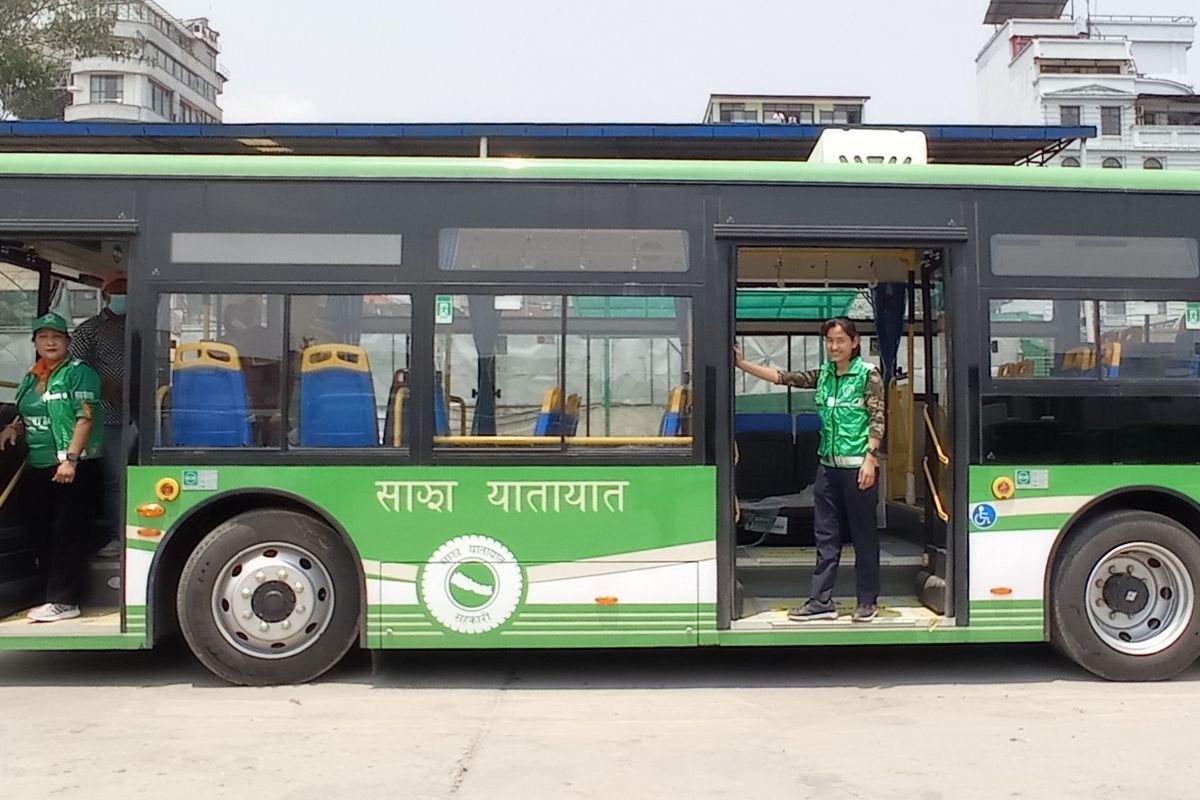
By Bus / Micro Bus
Local buses and microbuses are always available from Kathmandu and from Thamel towards Lalitpur (Patan). You can catch a vehicle for Pulchowk, Lagankhel, and Patan Dhoka and get down at the closest stop to Patan Durbar Square and reach within a 5 to 10-minute walk. The cost for transportation by local buses and microbuses would be approximately NPR 20 to NPR 35 for a single person, and it is the cheapest mode of transport available.
By Taxi and Ride Sharing Apps
The easiest and fastest transport option you can reach this square is by taking a taxi, which would take around 15-20 minutes from Thamel, depending on the traffic conditions. The cost for a taxi ride would range between NPR 300 and 500. Alternatively, instead of taking a taxi, you can also book either a taxi or a bike using the ride-sharing apps like Pathao, Yango, or InDrive, depending on the availability in your location.

Reaching Patan Durbar Square from Patan Area
- If you are already in Patan or in the surrounding area, accessing Patan Durbar Square will be very easy for you since most of the hotels and guest houses are no more than 10-15 minutes away on foot.
- The simplest way to reach it is by walking. Just proceed towards Mangal Bazaar, which is the main entrance, enjoying the streets lined up with local shops and temples along the way. This is the quickest means in terms of heavy traffic hours in the city.
- If you are carrying heavy baggage or do not want to walk, you can take a cycle rickshaw from nearby roads. It will cost you around NPR 50-100 for a short ride.
- For directions, one can follow the road signs leading to Patan Durbar Square. Offline maps and Google Maps can be used effectively in this region as well.
Patan Durbar Square Opening Hours and Entrance Fees in 2026
Patan Durbar Square Complex is open from 9:00 AM to 6:00 PM. It is necessary to purchase tickets to visit Patan Durbar Square to enter its main heritage site. They are issued from the counters set up at every entrance to Patan Durbar Square.
The Patan Museum, which is located within this complex, is closed on Tuesdays as well as public holidays. This open-air square area itself might be shut down during certain national holiday celebrations, like Shree Krishna Janmastami.
| Visitor Category | Fees (NPR) |
| Foreign Nationals | Rs. 1,000 |
| SAARC Nationals | Rs. 250 |
| Nepali Citizens | Rs. 30 |
Top Attractions Inside Patan Durbar Square
Krishna Mandir
The most revered temple of Patan Durbar Square is the Krishna Mandir. This temple was constructed in the year 1637 AD by King Siddhi Narsingh Malla. The temple is solely made of stone, whereas most Nepali temples are made with brick and wood. The structure is based on the Shikhara style of architecture, similar to North Indian temples.
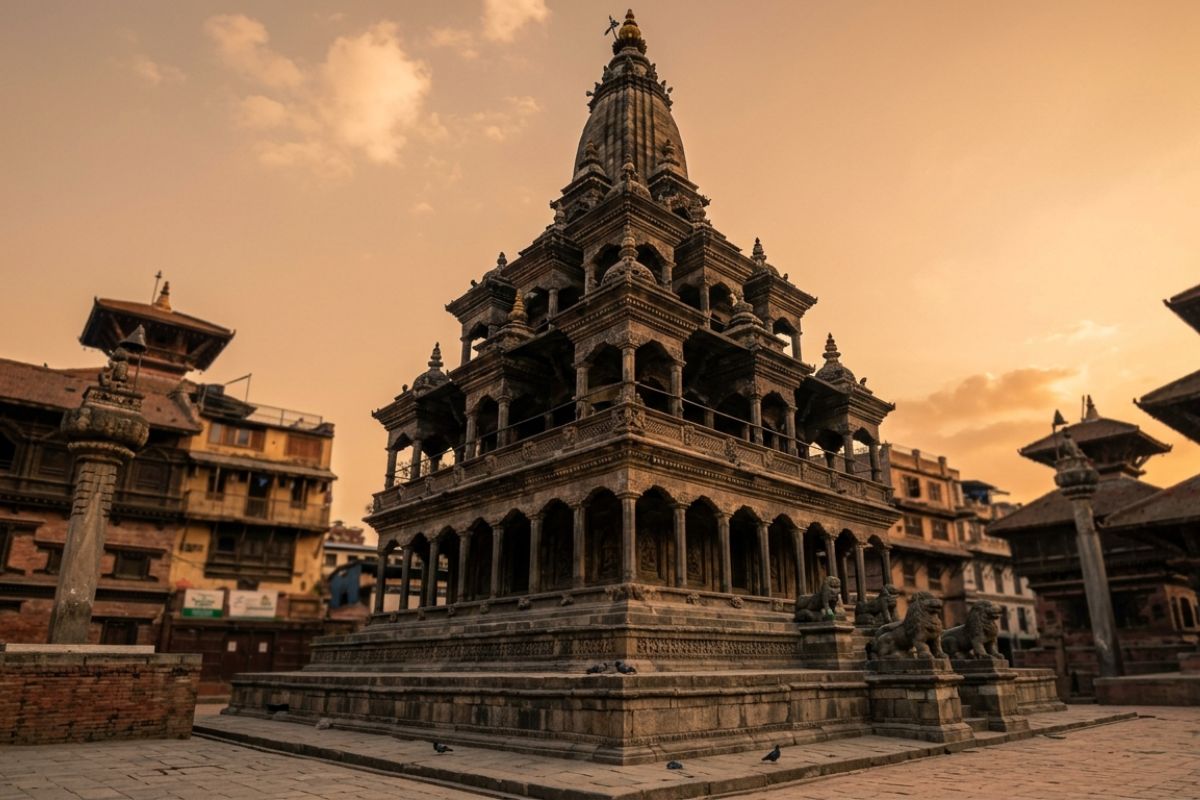
In the temple, there are three floors, the first one being for Lord Krishna, the second for Lord Shiva, and the third for Lokeshwor. Along the walls, there are stone carvings that depict the episodes in the Hindu epics of the Mahabharata and Ramayana. These carvings are like storybooks in stone, important to understand the mythology of the Hindus.
Each year, during the occasion of Krishna Janmashtami, the temple attracts thousands of devotees, and the surroundings of the temple become filled with devotees, music, and local vendors.
Patan Museum
The museum is situated within the old royal palace and is regarded as one of the finest museums in Asia dedicated to Nepalese art. The museum contains bronze sculptures, religious artifacts, woodcarvings, and traditional crafts depicting various eras of Nepalese history. The structure was originally part of the Malla Palace and has been renovated to offer both the artworks and architecture together to its visitors.
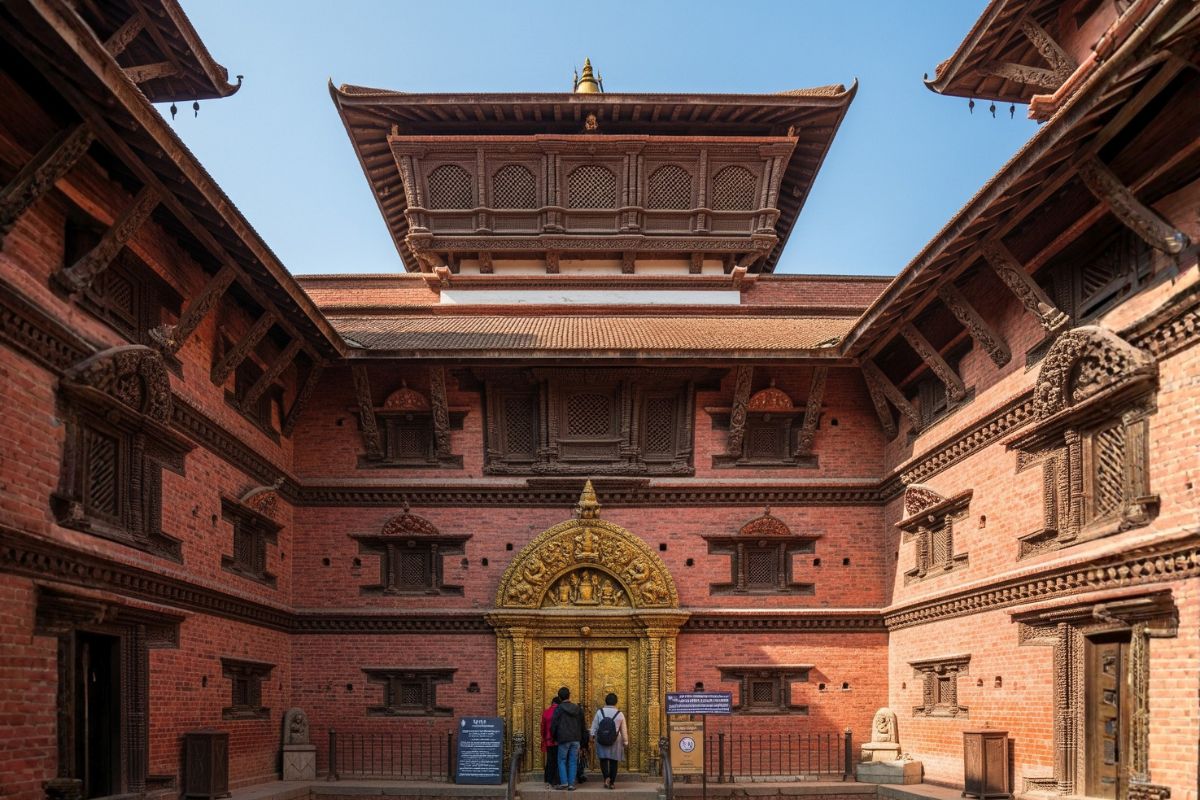
Inside the museum, the information is provided both in basic English and Nepali so that one can easily perceive the meaning of Hindu and Buddhist art. Included among the key highlights is a remarkable collection of bronze statues of Buddha and various Hindu gods, as well as clear explanations of Tantric traditions. The museum also contains detailed models showing traditional Newari architecture that help visitors learn about local building styles and culture. Quiet courtyards and rest areas provide a peaceful atmosphere right in the center of this busy square.
The museum also has a cafe and clean toilet facilities, which are very useful for travelers who plan to spend a long time exploring Patan Durbar Square and the surrounding heritage sites.
Bhimsen Temple
This temple is named after the god, "Bhimsen," who represents trade. This place has been a worship site for local businessmen and business communities for their prosperity. This temple consists of three-tiered "Pagoda" structures and wooden windows.
The entrance is guarded by two stone lions. The wooden pillars surrounding the temple contain carvings of various gods and scenes of daily life. The temple is significant for Newar people as Bhimsen is believed to protect their businesses.
During the festivals, traders offer flowers, oil lamps, and coins before starting the key business activities.
Vishwanath Temple
Vishwanath Temple is a Shiva temple built in 1627 AD. The temple stands close to Krishna Mandir and is easily recognizable because of the two stone elephants at the front.
The temple has beautiful wooden carvings on its doors and windows. The roof in the pagoda style is crowned with golden pinnacles. Inside the temple is a Shiva Linga, which is worshipped daily by local priests.
Visitors can often spot local people performing their morning and evening rituals here. Non-Hindus are not allowed inside the main shrine, but they still can observe the temple and rituals from outside.
Taleju Bhawani Temple
Taleju Temple is the holiest temple in the Patan Durbar Square complex. It was the royal deity of the Malla rulers. This temple is situated in the courtyard of the palace and is always kept closed to outsiders. The temple features high steps, brick walls, and wooden doorways of excellent quality.
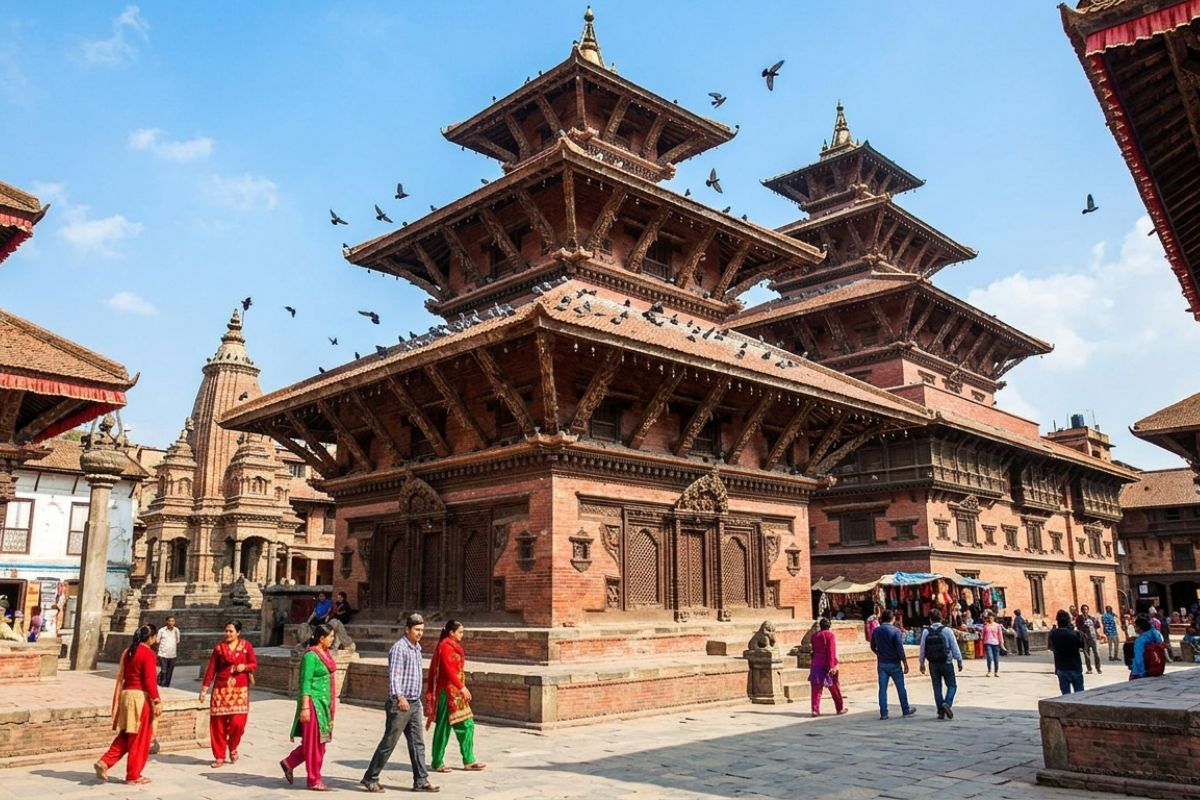
Only the priests and a few local families get to visit the temple. The temple is only open once a year during the time of the Dashain festival for the general public to visit. Although foreigners are not allowed entry, its external architecture reflects how important the Malla royal religion was to the structures.
Sundari Chowk and Tusha Hiti
Sundari Chowk is among the three main courtyards of the palace complex. At the center of Sunderi Chowk is the royal bath, Tusha Hiti. The water tank is sunken and carved from stone, with carvings of great detail.
Tusha Hit was a ritual bath used by Malla kings. Water flowed into it through rock spouts that led from ancient canals. Around Tusha Hit is found carvings of snakes, gods, and tantric marks.
Currently, this courtyard is a part of the area associated with the Patan Museum, where tickets to visit the museum will give access to this courtyard too.
Mul Chowk and Keshav Narayan Chowk
The oldest courtyard of this palace is the Mul Chowk, used for royal religious rituals. There is a small shrine of Taleju in the center of this courtyard. The Taleju shrine was used for important state rituals in this period of Malla reign.
The courtyard is encircled with wooden windows and doors featuring Newari carvings. It is comparatively peaceful compared to the outer square.
The present Keshav Narayan Chowk has been made into the main part of Patan Museum. The historical place was earlier used for residential purposes by the kings. There is a temple of Lord Narayan (Vishnu) in this courtyard.
However, the restorations have ensured the conservation of the brick floors, carved windows, and wooden balconies of the palace, which give the tourists an idea of what the palace might have looked like in the past.
Things to do in Patan Durbar Square
Explore hidden courtyards and bahals
Explore the courtyards and bahals, which lie behind the main square. These have temples, shrines, and houses featuring wooden carvings. Observe residents performing their rituals, kids playing, and living their daily lives among these surroundings of Patan. These areas are generally peaceful when compared to the main square and have reflected how residents lived long ago.
Visit the Golden Temple
Golden Temple (Hiranya Varna Mahavihar) is a few minute’s walk away from Patan Durbar Square. It is a Buddhist monastery where you can see prayers being performed by the monks and the inner courtyard. Be sure to follow local guidelines on taking pictures here. A visit to the temple reveals the Buddhist culture and heritage in the city of Patan.
Observe Metal Statue Making
Near the square are local workshops where brass and bronze statues are made by traditional methods. Observe artisans making statues using the lost wax technique. You can estimate how long it takes to make each piece and understand the skill that is involved. Some workshops allow you to buy small items directly from the makers.
Shop for handicrafts and souvenirs
Walk around the street surrounding the square to find stores where you can purchase local crafts. You can purchase wooden masks, Thangka paintings, singing bowls, brass statues, and textiles. Remember to bargain during transactions as it is common when dealing with vendors here in Nepal.
Enjoy rooftop cafe views
There are cafes around the square with rooftop seating areas. You can see temples, palace structures, and streets from atop. The rooftops are ideal for photography, best during morning or evening hours. Tea, coffee, and local food are served at cafes to give you relief while touring.
Note: If you are visiting Nepal or exploring the Kathmandu Valley, make sure to include Patan Durbar Square in your itinerary. You can explore the square on your own for a whole day or join a guided tour to learn its history, temples, and local traditions. It's easy to combine with a full-day sightseeing trip in Lalitpur or as part of a Kathmandu Valley tour.
Best Time to Visit Patan Durbar Square
You can visit the Patan Durbar Square at any time of the year. Spring (March to May) and autumn (September to November) are the best time with good weather conditions and ideal for sightseeing and photography. During the time of celebrations such as the celebration of Bhoto Jatra, Rato Machhindranath Jatra, and Janmashtami, the place is full of life, and one can experience processions and rituals being performed.
Even on normal days, the square is full of activities with the locals, artisans, and street vendors, providing insight into life in Patan. During festivals, a visit to the area is a great cultural experience, but other times of the year ensure a peaceful sightseeing tour.
Where to Eat Near Patan Durbar Square
Local and Traditional Food
Patan Durbar Square has several eating spots where one can enjoy classic Nepali as well as Newari cuisine. Newa Ghasa Patan offers local Newari foods such as chhoila, bara, yomari, and sukuti, while Honacha offers Newari thalis as well as Newari snacks. For Newari meals, one can visit the Yala Kitchen, and for chatamari and bara, Thamel Newa Kitchen is the place to be.
For complete Newari thalis, both veg and non veg, one could try Patan Heritage Home and Restaurant
There is also street food around the square. The vendors sell bara, momo, chatamari, and other sweets such as yomari and more. The vendors operating along Swotha Road offer Newari snacks when exploring around.
Roof Top Restaurants
If you are interested in enjoying the complete view of Patan Durbar Square, there are some rooftop restaurants that you can visit. These restaurants include View Brew Café, Mo:Mo King Rooftop, Triveni Rooftop Restaurant, Restaurant Royal and Rooftop Garden, Underground and Rooftop Restaurant, and Tsem Grill House and Rooftop Cafe.
These restaurants on the rooftop are easily accessible around the square area, and you can locate them on Google maps too. These restaurants give you a nice spot to relax while you enjoy the scenery of Patan.
Casual Meals and Varieties
If you need a place for a quick bite or a relaxing break, you will find many cafes and restaurants in the surrounding region. The popular cafes and restaurants include Cafe Swotha, Cozy Corner Cafe, Cafe Timila, Dhokaima Cafe, Foodhub by H20, Ganvi's Eatery, De Pizza Square, Mangale Restro, Cafe Du Temple Lalitpur, Patan Royal Cafe, and Little Patan Restaurant and Cafe.
Such cafes and restaurants are very easy to locate and provide various food options, snacks, coffee, as well as drinks. This makes it an ideal place for tourists to relax, eat, or have a casual meal as they roam around the square.
Festivals Celebrated in Patan
Bhoto Jatra
The celebration of Bhoto Jatra takes place in July, and it marks the end of the Rato Machhindranath chariot festival. The festival is in honor of Lord Machhindranath, the god of rains, and it involves showing the deity's sacred vest (bhoto) to the public. The ritual, which has its roots in old times, was practiced to show devotion and blessings through the vest. People in the neighborhood gather at the square to watch the event, which is filled with music, traditional dances, and street vendors. The vest can be seen on the chariot, and visitors get a chance to feel the community’s religious commitment.
.jpg)
Rato Machhindranath Jatra
Rato Machhindranath Jatra is also one of the oldest and largest festivals held in Patan, taking place in April and May (Baisakh). The festival is named after Rato Machhindranath, who is a rain and harvest god. The festival is performed when a huge chariot made of wood is pulled through the streets of Patan over a period of time. The festival has existed for over 300 years and is a practice of the people’s belief that this god is a guarantee of good agriculture and rainfall. The visitors can not only see the procession of the chariot but also witness the ceremonial rituals performed at different places, and see the locals participating in the festival with great enthusiasm..jpg)
Krishna Janmastami
Krishna Janmastami is a festival that marks the birth of Lord Krishna, taking place in August (Bhadra month) most of the times. It is one of the major Hindu festivals in the valley in a historical sense. At the Krishna Mandir in Patan Durbar Square, the worshippers pray, sing devotional songs, and perform rituals. The temple and its surroundings are beautifully decorated, while the local vendors provide the customers with food and items related to the festival. The presence of visitors is allowed at the traditional rituals, the idol worship and the vibrant atmosphere of the festival.
Gai Jatra
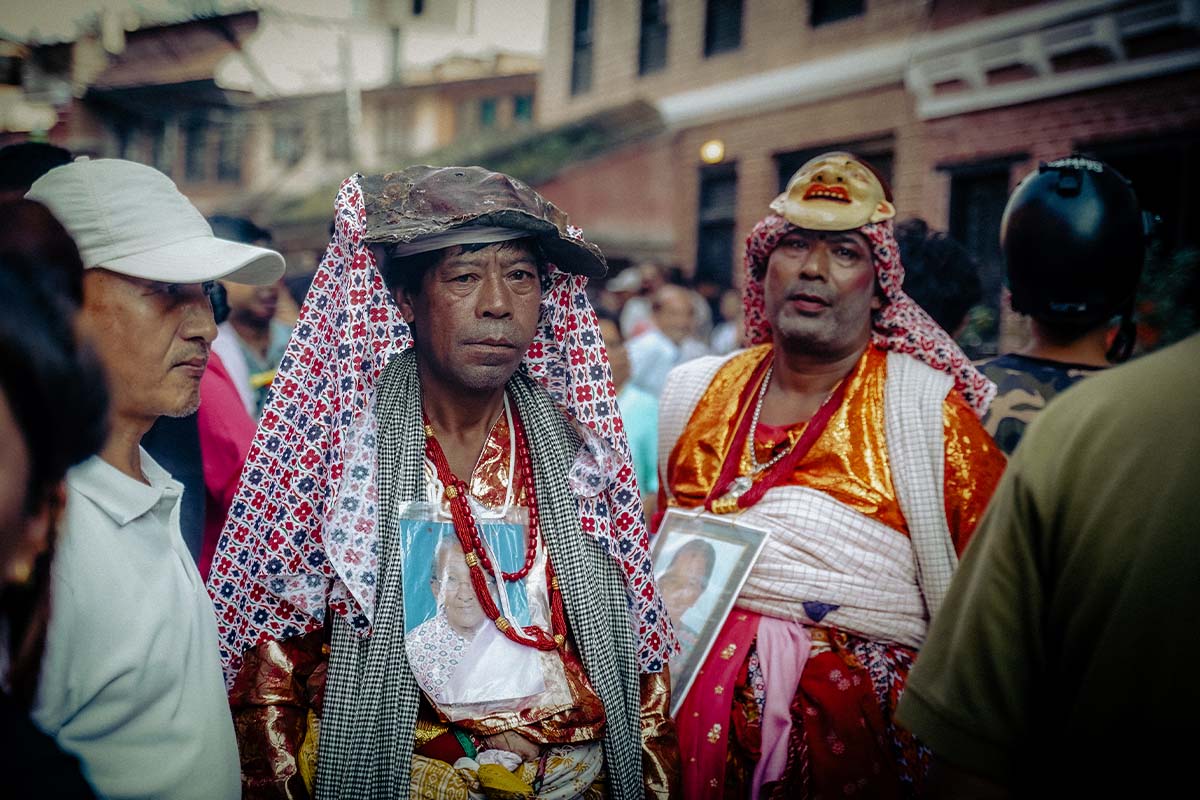
Gai Jatra, also called "Cow Festival", falls in the month of August-September (Bhadra month) to ensure a peaceful afterlife for the dead family members. Every family, mostly from the Newari community, participates in the parade, taking decorated cows or even children in cow costumes through the streets, believing the cow will guide the soul to the afterlife. Historically, Gai Jatra belongs to the Newar community and involves several music and dances and comic street shows to soothe the grieving spirits of mourners. Tourists can participate and observe colorful processions, traditional rituals, and vibrant cultural performances reflecting customs and beliefs prevalent in the local sphere.
Nearby Attractions to Combine with Patan Durbar Square
Tourists can easily combine a visit to Patan Durbar Square with other attractions in the area. Other attractions include Kathmandu Durbar Square, Bhaktapur Durbar Square, Swayambhunath ( Monkey Temple), Pashupatinath Temple, and Changu Narayan Temple. All these locations lie in the Kathmandu Valley. One can get to them using a car, taxi, or a tour. Combining all these locations with Patan Durbar Square gives visitors a glimpse into the history, culture, and architectural heritage of the valley all in one day.
Frequently Asked Questions
Do I need a guide to explore Patan Durbar Square?
You can also explore Patan Durbar Square alone, but a guide can help you learn more about the history, artistic, and cultural values of the temples, courts of this square, and its museum. This can also enlighten you about the Newari culture of this square.
Can tourists enter the temples in Patan Durbar Square?
Temples such as the Taleju Bhawani are only accessible to priests and those who belong to the locality, whereas others such as Krishna Mandir and Vishwanath Temple have viewing areas where one may watch religious performances.
How long should I plan to spend at Patan Durbar Square?
The average visit takes about 2 to 4 hours to see the main temples, courtyards, and museums. You might spend more time on rooftop cafes, local food, handicraft shopping, or festival events.
Is it safe to visit Patan Durbar Square at night?
The square in general is safe during the day; at night, it is rather quiet and less eventful. Most shops and cafes close, so it’s better to visit only during daylight and return to your hotel after sunset.
Can I take photographs inside the square and temples?
Photography is allowed in the majority of the square area and in the courtyards, but some temples may prohibit it inside. Always ask permission first and never disturb the worshippers.
Conclusion
Patan Durbar Square is one of the most important cultural and historical sites in the Kathmandu Valley. Visitors can explore temples like Krishna Mandir, Bhimsen Temple, and Vishwanath Temple, as well as courtyards such as Sundari Chowk and Mul Chowk. This UNESCO world heritage site in Nepal showcases Nepalese art, bronze statues, and traditional crafts, providing a deeper understanding of the city’s heritage. Hidden courtyards, local workshops, and street markets show everyday life in Patan and offer opportunities to observe artisans at work.
Visitors can enjoy traditional Newari food at restaurants like Newa Ghasa Patan, try street snacks around the square, or relax at rooftop cafés and casual eateries nearby. Patan Durbar Square is accessible by bus, taxi, or on foot, and it can be visited year round. Festivals add cultural experiences, while quieter days allow for relaxed exploration.
For guided tours and more travel support, feel free to contact Footprint Adventure to explore Patan Durbar Square and the Kathmandu Valley with local experts.