Manaslu Circuit Trek vs Annapurna Circuit: Quick Comparison
| Key Information | Manaslu Circuit Trek | Annapurna Circuit Trek |
|---|
| Location | Manaslu Conservation Area, West Nepal; the trail usually starts at Soti Khola and ends in Dharapani | Annapurna Conservation Area, West Nepal; the trail usually starts at Besisahar and ends in Muktinath or Jomsom |
| Maximum Altitude | 5,106 m (16,752 ft) at Larke La Pass | 5,416 m (17,769 ft) at Thorong La Pass |
| Trek Distance | Approx. 180 km/112 miles | Approx.160 km/99 miles |
| Trek Duration | 15-16 days, including acclimatization | 13-14 days, including acclimatization |
| Side Trips | Tsum Valley Trek - 3 extra days | Tilicho Lake - 3/4 extra days |
| Trek Cost | Approx. 1,790 USD/pp | Approx. 1,590 USD/pp |
| Required Permits | - Manaslu Restricted Area Permit (RAP)
- Manaslu Conservation Area Project (MCAP) Permit
- Annapurna Conservation Area Project (ACAP) Permit
- Tsum Valley Permit (optional, only if doing Tsum Valley side trek)
| - Annapurna Conservation Area Project (ACAP) Permit
- Trekking Information Management System (TIMS) Card
|
| Permit Fees | USD 130-140 pp | USD 35 pp |
| Best Time to Trek | March - May, September- December | March- May, September- November |
| Crowd Level | Less crowded, off-the-beaten path, offering peaceful trekking | Moderate to busy, popular trek with more trekkers |
How to Reach Manaslu Circuit and Annapurna Circuit Trek: The Starting Points
Manalsu Circuit Trek
The Manaslu Circuit Trek (MCT) typically begins at Machha Khola, located in the Gorkha District, approximately 140-160 km from Kathmandu. It takes about 7-10 hours to drive there. In some instances, treks may begin from Soti Khola, depending on road conditions and accessibility.
To reach Machha Khola, you can take a public bus or a private vehicle through Kathmandu, which passes through Malekhu/ Dhading, Arughat, and Soti Khola. Private vehicles tend to be quicker than buses, and are far more comfortable; whereas local buses generally leave Gongabu Bus Park at 6:30 AM, and can take anywhere between 10 and 12 hours. While it is a cheaper alternative, local buses are both crowded and slow.
Annapurna Circuit Trek
The traditional Annapurna Circuit Trek (ACT) begins at Besisahar in the Lamjung District, although many people now start their trek at Chame in order to save time. The route to Chame takes trekkers through Besisahar, Dharapani, and Jagat.
It takes about 6-7 hours from Kathmandu to Besisahar by private transport. Then a four-wheel-drive jeep is needed to proceed to Chame. This takes an additional 4-6 hours by private transport. For budget-conscious people, there are public buses from Gongabu New Bus Park through to Besisahar costing NPR 700-1,200, along with a shared Jeep to proceed further to Chame.
Summary: The Annapurna Circuit has improved access roads and easy transportation services. Trekkers can select to begin their trek from various points, and the approach to the trekking trail is easier and faster. For the Manaslu Circuit, there is a longer approach on rough roads and fewer options to get there. Thus, reaching the starting point of Manaslu is much more difficult in comparison to Annapurna.
Manaslu Circuit and Annapurna Circuit Trek Duration Comparison
Both the Annapurna Circuit Trek and the Manaslu Circuit Trek take about two weeks when trekking from Kathmandu. For the ACT, it would take about 13 days, while the MCT would take about 16 days. This would include the journey over the land from Kathmandu to the end of the trek.
However, if you choose to have side trips, the duration changes. For Annapurna, the journey to Lake Tilicho adds about 3-4 days. For the Manaslu trek, the journey to the Tsum Valley adds about 3 days to the duration.
Both treks have a similar total duration, although the Manaslu trek takes a bit longer, considering the longer walks and the isolated route. Annapurna treks allow for a slightly shorter trek and easier road access to trek starts and tea houses.
Summary: The Annapurna Circuit Trek is the better option if you are looking for simpler logistics, shorter walking days, and a more flexible itinerary. Besides, it gives better infrastructure, easier transportation access, and more comfortable trekking than Manaslu.
Manaslu Circuit vs Annapurna Circuit Difficulty Level
Trekkers mostly consider the Manaslu Circuit to be harder than the Annapurna Circuit. Manaslu takes the trekking route through a very remote and underdeveloped area where the paths are steep, rocky, and sometimes landslides block them.
Tea houses provide only minimal facilities, and the internet, hot showers, and food choices are very limited. The trail is silent and distant, thus giving a very strong experience of wilderness but little quick support. The highest point, Larkya La Pass at 5,160 m, requires a long, cold ascent and carries a higher risk of altitude sickness.
The Annapurna Circuit, on the other hand, is much easier and very established. The paths are wide, the villages are connected by roads, and the lodges offer better rooms, menus, and phone networks. Supplies, transport, and rescue options are very accessible. Although Thorong La Pass, with an elevation of 5,416 m, is higher, the ascent is gradual, and acclimatization is more comfortable.
Summary: For long endurance, experienced hikers with good preparation, Manaslu is really worth it due to its rugged terrain, difficult access, and remote conditions. Annapurna provides better infrastructure and safer logistics, thus making it suitable for intermediate hikers.
High Passes on Manaslu Circuit and Annapurna Circuit Trek
The highest summits on the Annapurna Circuit, Thorong La at 5416 m, and the Manaslu Circuit, Larkya La at 5160 m, are considered the main obstacles.
In the Annapurna Circuit, trekkers generally spend the night in either Thorong Phedi or High Camp before setting out for their summit attempt for Thorong La Pass, typically beginning to trek at 04:00–05:00 am.
The ascent from Thorong Phedi is gradual, and the trail is wide, allowing most trekkers to reach the summit within 3–4 hours of departing Thorong Phedi. The trek will then continue down to Muktinath.
In contrast, the trek to Larkya La starts from Dharamsala, which is located lower on the south side of the mountain, and requires the trekkers to rise early in cold weather and begin trekking up the steep, rugged route. This route frequently involves ice and snow. It approximately takes 5–7 hours to ascend from Dharamsala to Larkya La, after which there is a long descent to Bimthang.
When comparing the difficulties of passes, Larkya La seems tougher because of the trails in very remote areas, limited services, and rapid weather changes. Although Thorong La is higher, it remains safer due to the availability of good lodges, clearer paths, and more acclimatization areas.
Crowd Levels on Manaslu Circuit vs Annapurna Circuit Trek
The Manaslu Circuit trek remains quiet and uncrowded throughout the year. Small groups of trekkers meet each other on the trail, and many days are experienced as distant and tranquil. The lodges are fewer in number, but it is still very easy to find a place to sleep even during the peak season. The restricted area permit and guide rule are the main reasons that lead to limiting the number of visitors.
The Annapurna Circuit receives many more trekkers. The popular parts like Chame, Manang, and Thorong Phedi are crowded in the months of October, November, April, and May. Tea houses get filled very quickly; therefore, booking tea houses in advance is highly recommended. The availability of roads also leads to the influx of locals and vehicles to some sections of the trail.
Summary: Select Manaslu if you want solitude, unobstructed paths, and wilderness experience. On the other hand, select Annapurna if you enjoy more social trekking, greater facilities, and easier logistics, but be ready to face the crowds during the peak seasons.
Which Trek has Better Scenery, Manaslu or Annapurna?
The landscapes of the Manaslu Circuit and the Annapurna Circuit differ significantly. Manaslu appears to be more natural and greener, while Annapurna's character at the top turns drier and windier.
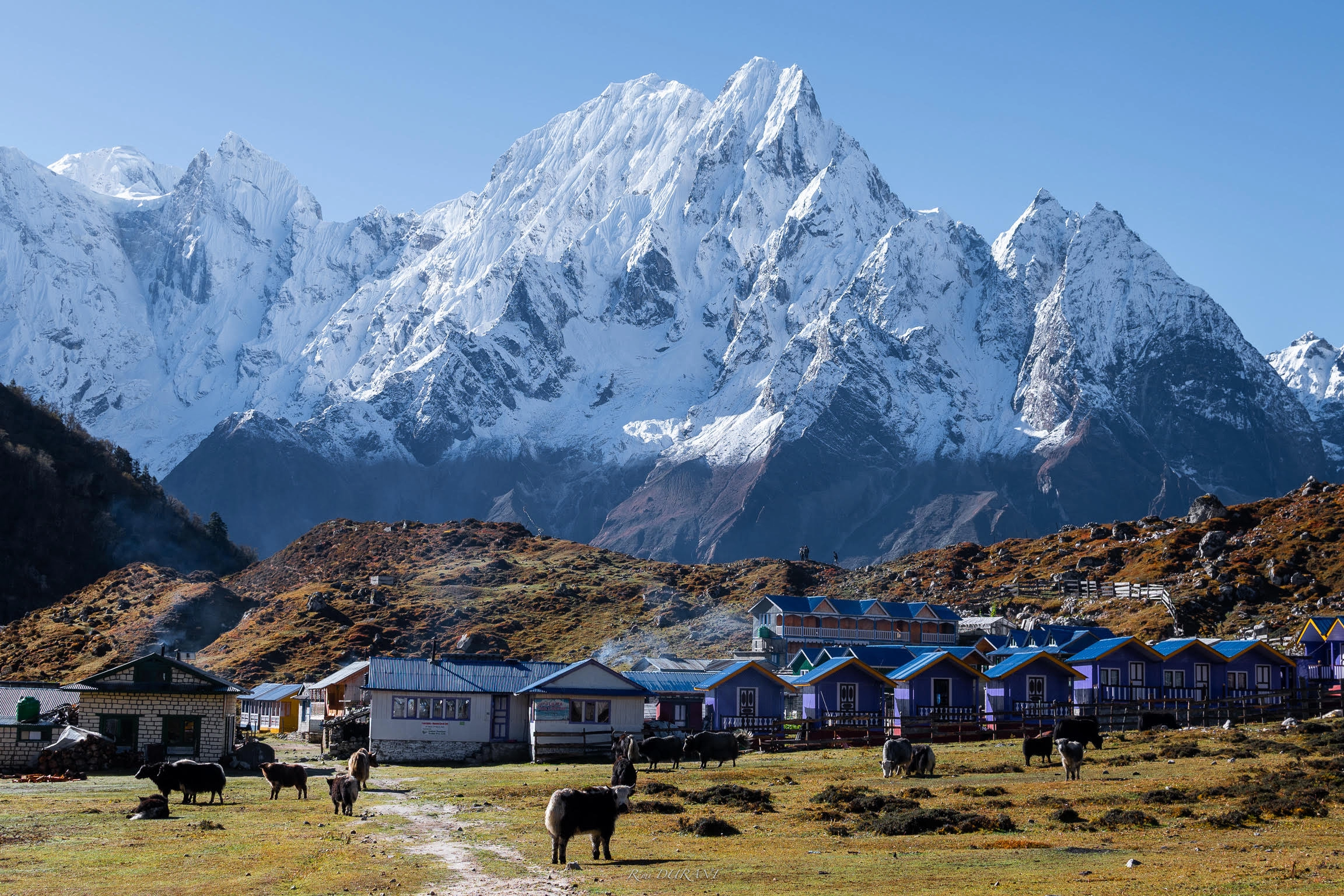
The Manaslu trek takes you through the jungles of pines, junipers, and rhododendrons from Machhakhola to Samdo. The Bimthang to Tilche section comprises pathways with oak and pine trees and clear glimpses of Mt. Manaslu, which is quiet and soothing. For several days, the Budhi Gandaki River accompanies the route, and long suspension bridges make the trek worthwhile.
The Annapurna Circuit especially looks very dry after Upper Pisang. Besides, the forests between Dharapani and Pisang are thinner. The route from Brathang to Dhikur Pokhari is soothing, though the regions around Manang and Thorong La that are at a higher altitude are still dry and windy.
Takeaway: If you like your scenery to be greener with rivers and forests, then you would definitely enjoy the Manaslu Circuit Trek. Annapurna offers excellent mountain views, but it feels more arid and windy.
Mountain Views on Manaslu Circuit vs Annapurna Circuit Trek
Both treks go around one of the eight-thousand-meter Himalayas. The Manaslu Circuit is a trip that goes around Mt. Manaslu (8163 m), the 8th tallest mountain; this trek also offers views of surrounding mountains, including Ganesh Himal, Cheo Himal, Himlung, and Nemjung. You can see Mt. Manaslu for the first time at Lho on day three of your trek; Larkya La Pass gives you a stunning view of the glacial cirque and surrounding mountains.
The Annapurna Circuit goes around Annapurna I Mountain (8091 m), the 10th tallest mountain; this trek has numerous views and surrounding mountains, including Dhaulagiri, Annapurna II, III, IV, Nilgiri, Gangapurna, Pisang, and Machhapuchhre. Trekkers will see mountain views on day one and from Thorong La Pass you will have amazing 360-degree views of numerous surrounding mountains.
In terms of mountains and broader beautiful ranges, there is much more in Annapurna. Manaslu has fewer mountains but has incredible close-range views of Manaslu itself. For photographers, Annapurna provides a variety of scenes; for the striking view of the single mountain, Manaslu wins.
Cultural Experience on Manaslu Circuit Trek vs Annapurna Circuit Trek
Annapurna has a rich cultural heritage that includes both Hinduism and Buddhism. Famous Buddhist attractions include the Braga monastery and the Milarepa Cave. Muktinath is a well-known Hindu shrine containing 108 water spouts that pilgrims can bathe in.
During the acclimatization in Manang, one can visit Milarepa Cave. Also, after crossing the Thorong La Pass, one can visit the Muktinath Temple. The mix of Hindu and Buddhist cultures in the trekking route provides cultural diversity in Annapurna.
Manaslu's Tibetan culture is evident through its numerous Tibetan refugee descendants that populate the area. The vast majority of people practice Buddhism, and trekkers can observe many examples of this religion in Stupas, Mani walls, Monasteries, Prayer Flags, and Stones that are engraved with Buddhist Scriptures.
Some of the most notable landmarks in this area include Pung Gyen Gompa, Sama Gaun Monastery, and Kargyu Chholing Monastery, which are all located at the base of Mount Manaslu. Additionally, trekkers have the opportunity to observe numerous Buddhist Festivals that take place in March or April, such as Buddha Jayanti (Buddha’s Birthday).
Summary: Manaslu offers a peaceful, Tibetan-Buddhist cultural experience found in isolated villages. Annapurna, on the other hand, offers a blend of Hindu and Buddhist culture with easier pilgrimage destinations and more varied rituals practiced on the trail. Be mindful of cultural practices while temple and monasteries.
Accommodation and Food on Manaslu Circuit vs Annapurna Circuit Trek
There is not much difference in terms of food and accommodation between the Manalsu Circuit and the Annapurna Circuit trek. Generally, both of these routes offer twin-sharing rooms, hot showers, Wi-Fi, electricity, and in some tea houses, an attached bathroom. The types of food available in them are very varied and prepared with great cleanliness. Some of the types of food you can expect to find at the tea houses, even in higher elevation areas on both of the circuits, would be dal bhat, noodles, pancakes, porridge, and desserts.
Over the years, Manaslu tea houses have become much more comfortable for travelers despite their very remote location. However, the Annapurna region has a longer history of developing its tea houses, and villages such as Chame, Brathang, and Manang have better large tea houses and even private houses. Additionally, the construction of the road leading from Besisahar to Manang means that it is much easier for people to deliver food and supplies along this route than on the Manaslu trek, which gives the Annapurna Circuit a slight advantage in terms of variety and comfort.
Summary: While both of the treks provide good accommodation and good food options, the Annapurna Circuit does provide a little more comfort for travelers and has larger lodges and better logistics for getting food and supplies. The Manaslu Circuit provides a much more rustic and cozy atmosphere.
Manaslu and Annapurna Circuit Trek Cost Comparison
Cost for trekking in the Annapurna Circuit and Manaslu Circuit varies based on the route, services provided, and the number of people in the group. Prices for guided treks on the Annapurna Circuit start around USD 1300 - USD 1700 per person for a standard trek. If travelling with a budget group, costs may be as low as USD 1200 - USD 1300. Costs are kept to a minimum because of the many teahouses and lodges located on the well-established route.
Manaslu Circuit is generally more expensive than Annapurna Circuit, ranging around 1400 - 1800 USD, due to the cost of restricted area permits, requiring that visitors hire licensed guides, and there are fewer service points on the Manaslu Circuit than there are on the Annapurna Circuit. This means that visitors will incur additional costs in terms of logistics and accommodations because of the difficulty in accessing this remote area.
Summary: Travelling in a group on both circuits offers significant cost savings as the cost of hiring guides, porters, transportation, and obtaining permits is shared by the group. Additionally, large groups often have the opportunity to negotiate discounted rates for packages, resulting in a significantly lower price per person as compared to travelling solo or with a small party.
Permit and Guide Requirements: Manaslu Circuit vs Annapurna Circuit
All trekkers who hike through Nepal must buy trekking permits and hire a trekking guide. There are two main kinds of permits: the Conservation Area Permit; and the Restricted Area Permit. In the past couple of years, local authorities have begun collecting entry fees that are included in each Local Area Permit as well.
The Manaslu Circuit Trek requires that all trekkers have a minimum of four different types of permits. The trek traveling through the Restricted Area of Manaslu requires a Manaslu Restricted Area Permit (MRAP). The cost for the MRAP is USD 70 for the fall season and USD 100 for the rest of the year.
Along with the MRAP, trekkers must have a Manaslu Conservation Area Permit (MCAP), an Annapurna Conservation Area Permit (ACAP) and a local government permit. The total cost for the four trek permits is around USD 130–160, making the Manaslu trek more costly than most treks on average by at least USD 70.
On the other hand, trekkers that hike the Annapurna Circuit trek will only need to purchase the ACAP. The cost for an ACAP is USD 25 ( NPR 3,000). Therefore, the cost difference of USD 135 between the two treks is significant; as a result, the cost to trek the Manaslu Circuit is generally higher than to trek the Annapurna Circuit.
Summary: The permits are mandatory. This means you need to ensure you have all the necessary permits for whichever trek you are going to undertake. Now, if you plan to do Manaslu first, then the ACAP Permit that you obtained there can also be used in Annapurna. Thus, if you want to go to Poon Hill or Annapurna Base Camp Trek, there is no need to purchase another permit.
Conclusion: Which Trek Should You Choose?
The Manaslu and Annapurna Circuit treks present different Himalayan experiences but have different prices, permits, and guide necessities.
Go for the Manaslu Circuit trek if you want to see untouched regions, ancient traditions, and narrow paths. The trek involves several permits and a licensed guide, which adds to the cost and complexity of the trip.
On the other hand, choose the Annapurna Circuit if you like easier paths, alternate routes, and lowered permit requirements. A guide is not required, and there are numerous lodges along the trail.
Group travel offers cost benefits on both treks by sharing guides, porters, and transport. Novice trekkers should start with Annapurna, while experienced trekkers can attempt Manaslu and add Annapurna if their itinerary allows.
If you are still undecided about which trek to choose, our expert sales team at Footprint Adventure can provide assistance. Feel free to contact us.
Frequently Asked Questions
How cold does it get on Manaslu and Annapurna Circuit Treks?
The high-altitude areas experience a significant drop in temperatures. During the day, people in the lower regions of both treks can expect a temperature range of 10–20°C. The temperature near the passes may go down to –10°C or even lower at times, particularly during the months of October–November and March–April. The winter season can bring temperatures as low as –15°C to –20°C at Larkya La and Thorong La.
Which trek is better in the monsoon season?
The Annapurna Circuit Trail is perfect in the rainy season. The Manaslu area has the heaviest rain, and the paths become the most muddy and dangerous. The Annapurna region is partly located in a rain-shadow zone, thus the weather is less rainy and more clear, particularly around Manang and Mustang.
What is the best way to get to the starting point of each trek?
For the Manaslu Trek, you can travel by jeep or bus from Kathmandu to Soti Khola or Machha Khola. When doing the Annapurna Circuit, your transportation includes driving from Kathmandu or Pokhara to Besisahar, and then by jeep to either Bhulbhule, Jagat, or Chame based on your itinerary.
Are there medical facilities along the Manaslu and Annapurna Circuit?
The Annapurna area has more medical facilities. Health posts are in Manang and a small clinic is available in some villages. Manaslu has very little medical assistance, mostly consisting of rudimentary health posts. For both routes, a helicopter evacuation is necessary in case of emergencies.
Can I trek these circuits without a porter?
Yes, trekking without a porter can be done if your physical condition allows you and you can handle your own backpack. Nevertheless, a porter would still make the trek easier and safer, particularly during long days and on high passes. A licensed guide is compulsory for both Annapurna and Manaslu, but hiring a porter is optional.
What is the risk of altitude sickness on each trek?
Both trekking routes are accompanied by a significant risk because they lead to altitudes exceeding 5,000 m. The summits are Thorong La (5,416 m) on Annapurna and Larkya La (5,160 m) on Manaslu. The risk can be minimized by walking at a slower pace, taking acclimatization days, drinking large amounts of water, and being familiar with the symptoms.
Is Wi-Fi or a mobile network available on these treks?
Annapurna has a better connection than Manaslu. The majority of the villages are covered by the mobile network, and the Wi-Fi is chargeable as well. Manaslu's service is quite limited; there are a few lodges offering Wi-Fi that is both slower and more expensive as you go up.
Which trek is better for photography: Manaslu or Annapurna?
The two trekking routes do have wonderful pictures to offer, but each has its own feeling. Manaslu gives you trails with fewer people, Tibetan-style hamlets, and stunning mountain views. The route to Annapurna has more diversity with its broad valleys, lakes, and close views of Annapurna, Dhaulagiri, and Tilicho Lake.
How much cash should I carry for each trek?
On the Annapurna Circuit, it is advisable to have cash of NPR 2,500–3,500 per day, while for Manasl,u the amount is NPR 3,000–4,000 per day. Manaslu is more expensive due to its remote location and not many ATMs being present. Bringing all cash from Kathmandu is a good idea as there are no dependable ATMs on the trekking routes.

.jpg)
/beautiful scenary (1).jpg)
