Highlights of Mera Peak Climbing
- Gradual acclimatization from Lukla through the Hinku Valley to Khare (5,100m) aids in preventing altitude sickness.
- Trekking through remote Sherpa villages, such as Thuli Kharka, Zatrwa, and Khare, and immersing in Sherpa culture, traditions, and hospitality.
- Rest, acclimatization, and learning the use of snow and ice techniques take place at Mera Base Camp (5,300m) prior to a summit ascent.
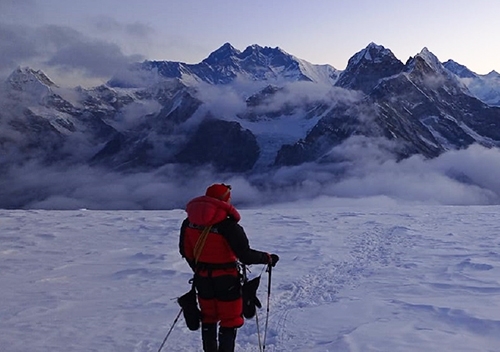
- The final ascent to the summit of 6,476m is on non-technical snow and ice slopes suitable for those with basic mountaineering training.
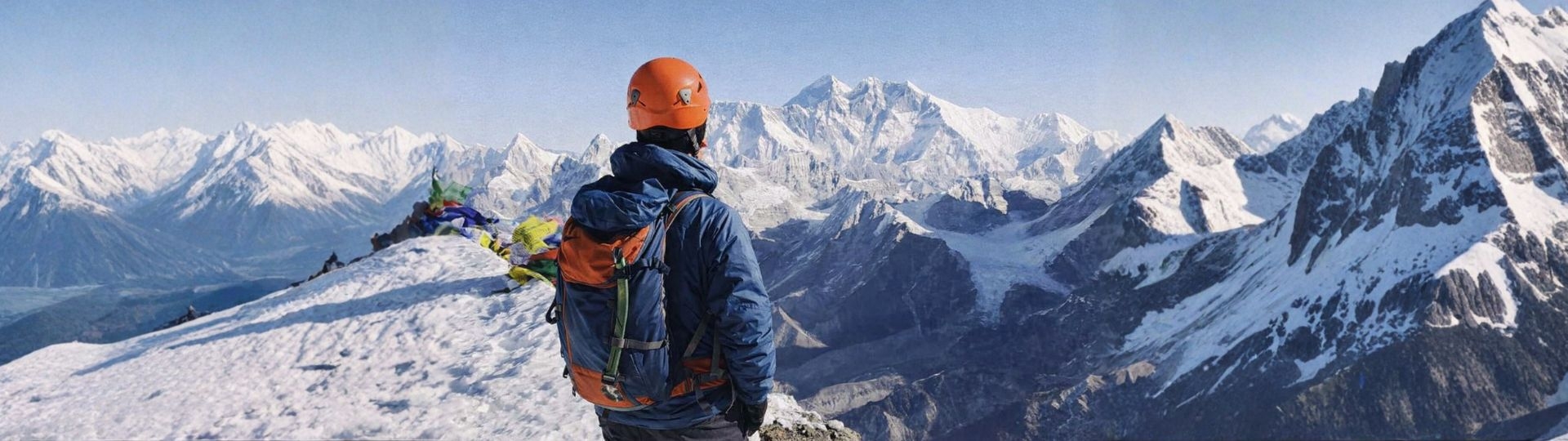
- Panoramic views include five 8,000m summits: Everest, Lhotse, Cho Oyu, Makalu, and Kanchenjunga, as well as other Himalayan peaks.
- Experiencing the use of mountaineering equipment such as crampons, ice axes, and ropes under the supervision of a guide.
- Trekking through glaciers, moraines, and snowfields, witnessing the transition from forested valleys to high-altitude alpine environments.
- Experiencing spectacular sunrise and sunset views at high altitude, ideal for photographers, and capturing images of the Himalayas.
- Completing high altitude trekking in a safe, guided environment that accommodates beginners and first-time climbers.
How Long Does it take to climb Mera Peak?
Mera Peak normally takes about 18 days starting from Kathmandu, although this will vary depending on the climber’s fitness levels, weather conditions, acclimatization needs, and the amount of rest taken. The Mera Peak climbing is broken up into approximately 12 to 13 days of trekking and acclimatization, and the final two to three days are used for summiting and descending. While this itinerary helps climbers with altitude acclimatization, adequate time must still be allocated to achieve a successful summit.
The Mera Peak trek passes many remote villages, numerous high alpine valleys, dense rhododendron forests, and an abundance of glacial terrain. Breathtaking views of some of the highest mountains in the world, such as Everest, Makalu, Lhotse, Cho Oyu, and others, are visible along the route.
Way up: Kathmandu - Lukla - Paiya - Pangkoma - Ningsow - Chhatra Khola - Kothe - Thaknak - Khare - Mera High Camp - Mera Peak Summit
Way down: Mera Peak Summit - Khare - Kothe - Thuli Kharka - Zatrwa La Pass - Lukla - Kathmandu
Standard Mera Peak Climbing Itinerary
Day 1: Fly from Kathmandu to Lukla and Trek to Paiya (2,840m)
Flight Time: 30-35 minutes
Trekking Distance: 6 km / 3.7 miles
Trekking Time: 3 - 4 hours
Day 2: Trek from Paiya to Pangkoma Village (2,930m)
Trekking Distance: 7 km / 4.3 miles
Trekking Time: 5 - 6 hours
Day 3: Trek from Pangkoma to Ningsow Village (2,863m)
Trekking Distance: 8 km / 5 miles
Trekking Time: 5 - 6 hours
Day 4: Trek from Ningsow to Chhatra Khola (2,800m)
Trekking Distance: 7 km / 4.3 miles
Trekking Time: 5 - 6 hours
Day 5: Trek from Chhatra Khola to Kothe (3,691m)
Trekking Distance: 6 km / 3.7 miles
Trekking Time: 4 - 5 hours
Day 6: Trek from Kothe to Thaknak (4,358m)
Trekking Distance: 7 km / 4.3 miles
Trekking Time: 4 - 5 hours
Day 7: Trek from Thaknak to Khare (5,045m)
Trekking Distance: 5 km / 3.1 miles
Trekking Time: 4 - 5 hours
Day 8: Acclimatization Day at Khare & Pre-Climbing Training (5,045m)
Trekking Distance: 2–3 km (training hikes)
Trekking Time: 2 - 3 hours
Day 9: Trek from Khare to Mera High Camp (5,780m)
Trekking Distance: 5 km / 3.1 miles
Trekking Time: 5 - 6 hours
Day 10: Summit Day – Mera Peak (6,476m) and Return to Khare
Trekking Distance: 10 km / 6.2 miles
Trekking Time: 8 - 10 hours
Day 11: Rest Day at Khare (5,045m)
Purpose: Recovery and contingency day
Day 12: Trek from Khare to Kothe (3,690m)
Trekking Distance: 9 km / 5.6 miles
Trekking Time: 4 - 5 hours
Day 13: Trek from Kothe to Thuli Kharka (4,300m)
Trekking Distance: 7 km / 4.3 miles
Trekking Time: 5 - 6 hours
Day 14: Trek from Thuli Kharka via Zatrwa La Pass (4,580m) to Lukla (2,840m)
Trekking Distance: 10 km / 6.2 miles
Trekking Time: 6 - 7 hours
Day 15: Fly from Lukla to Kathmandu (1,350m)
Flight Time: 30 - 35 minutes
How to Reach Mera Peak: Travel Routes and Logistics
Flight to Lukla
The trekking trail to Mera Peak begins with a 30 to 40-minute flight from Kathmandu to Lukla. The Lukla Airport has a very small runway and mostly fluctuating weather; hence, early morning flights are recommended for Lukla if one wants to avoid delayed or cancelled flights because of clouds and wind on some afternoons. The actual trekking to the Hinku Valley area begins from Lukla.
Trek from Lukla to Mera Peak Base Camp
The trekking route to Mera Peak normally takes a period of 8 to 10 days to enable proper acclimatization. The trekking route involves passing through forests, passes, and villages that are not along the route to Everest Base Camp and hence provides a peaceful trekking environment. The major points along the trekking route include:
- Paiya (2,730 m)
- Panggom (2,846 m)
- Ningsow (2,860 m)
- Chhatra Khola (2,800 m)
- Kothe (3,691 m)
- Thaknak (4,350 m)
- Khare (5,100 m)
- Mera Base Camp (5,300 m)
From Khare, climbers spend extra days acclimatizing and preparing before the summit push.
Return Journey
Most of the climbers, after reaching the summit of Mera Peak, descend back through the same route to Lukla. From Lukla, a short flight will take the trekkers back to Kathmandu, which marks the end of Mera Peak climbing.
How Difficult is Mera Peak Climbing?
Mera Peak climbing difficulty is rated as an Alpine Grade Peu Difficile, considered a moderately challenging climb. It is considered to be a trekking peak, but because of the high altitude and cold, good physical fitness and acclimatization are required. The technical difficulty is low; nonetheless, some basic mountaineering techniques and equipment, such as crampons and an axe, are needed for the last ascent. Trekkers must first complete the high-altitude treks such as the Everest Base Camp Trek, Annapurna Circuit, Everest Three Pass, or Manaslu Circuit before attempting Mera Peak.
How High is Mera Peak Climbing?
Mera Peak is the highest trekking peak in Nepal, at an elevation of 6,476 meters (21,247 feet) above sea level. At this height, the air is thin, and the oxygen level is low, which makes the climbing difficult.
Your body needs time to get used to it. Most climbers spend extra rest days at places like Khare and Mera Base Camp to slowly get used to the height. Going straight to the top without these stops could result in very serious altitude sickness. The beautiful views from the mountain and the feeling of success make the hike worth it. Standing at the top of Mera Peak gives climbers a 360-degree view of Everest, Lhotse, Makalu, and Cho Oyu.
Mera Peak Elevation in Feet and Meters
The highest point reached during the Mera Peak expedition is the Mera Peak summit. Mera Peak stands at 6,476 meters or 21,247 feet above sea level.
During the climb, trekkers will spend nights at camps like Khare (5,050 meters/16,568 feet) and Mera Base Camp (5,300 meters/17,388 feet) to give their bodies time to adapt to the elevation. This adaptation is vital, as at such heights, one can easily suffer from altitude sickness symptoms such as headaches, vomiting, dizziness, tiredness, and shortness of breath.
What Gear Do You Need to Pack for Mera Peak Climb?
For a Mera Peak expedition, it is crucial to pack the proper equipment and gear. You have to be efficient in your packing as you will be taking your gear along the whole trek and climb. Below is a basic packing list for the Mera Peak trek
Basic Packing Checklist
- Base layers (moisture-wicking tops and bottoms)
- Fleece jacket or down jacket
- Waterproof and windproof outer shell jacket and pants
- Trekking pants (quick-drying and comfortable)
- Lightweight and breathable t-shirts
- Sturdy trekking boots
- Warm gloves, hat, and socks
- Personal medications and toiletries
- Climbing Gear Checklist
- Trekking poles
- Crampons
- Snow gaiters (for snow or ice sections)
- Headlamp or torch
- Ice axe (for the final ascent)
- Harness, carabiners, and climbing rope
For a more comprehensive packing list for your Mera Peak climb, visit our detailed guide on what to pack for peak climbing in Nepal.
How Much Does it Cost for the Mera Peak Expedition in 2026?
The standard Mera Peak climbing expedition lasts from 15 to 18 days. The Mera peak expedition cost usually falls between $2,600 and $3,500 per person and includes domestic flights, required trekking permits, full board meals (Breakfast, Lunch, and Dinner) during the whole trek, a professional trekking guide, a porter, accommodation along with a certificate after the successful climb. Footprint Adventure provides appealing discounts for group reservations and people traveling on fixed dates.
How Dangerous is the Mera Peak Climb?
Thousands of people try to summit Mera Peak every year, with the success rate being around 70–95%. This makes Mera Peak one of the most popular trekking peaks in Nepal because of its manageable technical difficulty. On the other hand, it is a high-altitude climb at 6,476 meters, and risks like altitude sickness, changing weather conditions very fast, and icy conditions are all part of it. Proper acclimatization, good physical fitness, and experienced guidance are some of the ingredients for safety and maintaining a high chance of success.
What is the Best Season for the Mera Peak Expedition?
The Mera peak climbing season is during spring (March–May) and autumn (September–November) as they provide the most stable weather and best visibility for the panoramic views of the Himalayas. Spring is warmer and has a lush landscape while autumn has cooler air and clearer conditions after the rains. Both times are loved by climbers and are regarded as the peak trekking seasons.
The monsoon season (June–August) is characterized by heavy rains, poor visibility, and leeches, while winter (December–February) has extreme cold and heavy snowfall, thus making these seasons less favorable for the majority, but they can still attract some adventurous climbers who are in search of solitude.
Are there any Alternative Routes to Mera Peak?
There are several alternative routes to Mera Peak from Kathmandu. These routes are great for trekkers who want to avoid flights to Lukla, do not want to walk on crowded trails, and would like to acclimatize well while ascending. These alternatives will take several additional days, but they are rewarding in terms of cultural and natural exposures.
Phaplu Route
The Phaplu trekking trail starts with a scenic but quite lengthy jeep ride for about 10 hours from Kathmandu to Phaplu. From Phaplu, the trekking trail goes through various village settlements such as Nunthala, Pangkoma, Khari Khola, and eventually to Kothe, which meets the normal Mera Peak trekking trail. The Mera Peak trekking trail via Phaplu provides a gradual increase in elevation for better acclimatization compared to Lukla trekking trails.
Bung Route via Panch Pokhari
The journey begins with a jeep ride from Kathmandu to Bung which is in the lower Solu area. The trekking then takes you to the less populated areas of Khiraule and Taksindu while slowly going up through the forests and high pastures. One of the main attractions is the crossing of the revered Panch Pokhari lakes, where pilgrims flock to. The trail, after Panch Pokhari, goes down and joins the Mera Peak main route at Kothe. This route is peaceful, full of culture, and is perfect for the trekkers who want to be alone and also want to get used to the altitude naturally.
Everest Base Camp Route
The Everest Base Camp itinerary connects the traditional EBC trek with a Mera Peak experience. Generally, the trekkers arrive at Lukla either by flight or trek and then use the main Everest route through the places Phakding and Namche Bazaar for acclimatization in the Khumbu region. From Namche or adjacent villages, the path goes south towards the Hinku Valley, successfully getting to Kothe and then to Mera Peak Base Camp. This choice needs not only time but also patience, extra permits, and good strength.
How Cold is it at Mera Peak?
Mera Peak's temperatures are dependent upon the season and increase steeply as one goes up. In spring (March–May) and autumn (September–November), daytime temperatures generally range from about –5°C to 15°C, while nighttime and summit temperatures fall between –15°C and –5°C, and can drop to around –20°C in autumn.
The summer or monsoon (June-August) period is slightly warmer at lower elevations, with day temperatures ranging from 7°C to 19°C; however, the night at higher camps is very cold with the temperature still below freezing. The coldest phase lasts from December to February with the day time temperature mostly ranging between -5°C and 5°C and night-time or summit temperature dropping to below -20°C or lower. The higher you go, the colder it gets, so even when the weather on lower trails is pleasant, high camps and the summit are still very cold, especially at night.
How is the accommodation on Mera Peak Climbing?
Accommodations along the Mera Peak trek are mostly in teahouses and lodges that have basic but adequate facilities for trekkers. These lodges generally feature simple beds with mattresses, blankets and cold water shared bathrooms. Some higher altitude lodges may even have some limited hot water that can be purchased at an additional cost or obtained through solar heaters. Teahouses usually offer breakfast, lunch and dinner featuring local fare such as dal bhat, noodles and soups, and most have charging ports for electronics that can be used for a small fee. While Wi-Fi is available at times in larger villages, it can be slow or unreliable.
When you reach higher elevations, especially at Mera High Camp, you will stay in tented camps rather than lodges. These are typically simple yet sturdy tents that come with sleeping mats; however, you are advised to bring a high-quality sleeping bag rated for sub-zero temperatures so you can remain warm overnight. You will most likely spend at least one night in a tent at Mera High Camp to acclimatize and rest before your summit attempt.
How is the Food in the Mera Peak Expedition?
On the Mera Peak trek, most meals are available in teahouses and lodges along the trail. Generally, trekkers can find porridge, toast, eggs, pancakes, noodles, and tea or coffee for breakfast. The lunch and dinner menus are mostly the same and include dal bhat, noodles, fried rice, momos, and soup. From Lukla to Khare, at lower elevations, meals usually cost 3-7 $ per meal. While at higher camps from Base Camp and beyond to Mera High Camp, meals are less varied and more costly due to the difficulty in carrying supplies, often from 8-20$ or more per meal.
At Mera High Camp, meals are prepared in small tented kitchens. Options are basic, but normally noodles, porridge, soup, and tea, which will provide sufficient energy for the climb.
It is suggested that trekkers bring snacks such as chocolate, nuts, or energy bars with them, especially on summit day. Drinking water should be either purified or boiled; similarly, hot drinks, such as tea and coffee, are available in lodges for 1 to 2 dollars per cup.
Entrance and Permit Fees for Mera Peak Climbing
Sagarmatha National Park Entry Permit
The Sagarmatha National Park Permit is required for every trekker who enters the Sagarmatha region. A Sagarmatha National Park Permit provides entry into the protected region of the national park, which is inhabited by different Himalayan ecosystems and wildlife.
The price of the permit is NPR 3,000 for foreign nationals, NPR 1,500 for SAARC nationals, and NPR 100 for Nepali citizens, inclusive of VAT. Trekkers can apply for this permit either in the Nepal Tourism Board office in Kathmandu or the Sagarmatha National Park entry point in Monjo.
Khumbu Pasang Lhamu Rural Municipality Permit
Every trekker needs to have the Khumbu Pasang Lhamu Rural Municipality Permit before entering the Khumbu region. This permit is necessary and also helps contribute to the development of the rural area of the municipality.
The cost for trekkers is NPR 2,000 per person, which can be obtained after reaching Lukla. In contrast to the Sagarmatha National Park Permit, this permit cannot be bought in advance from Kathmandu.
Mera Peak Climbing Permit
The Mera Peak Climbing Permit, which is issued by the Nepal Mountaineering Association (NMA), is a necessity for every climber who attempts to summit the Mera Peak. This permit monitors and controls climbing activities as well as assuring that climbers observe the national mountaineering rules. The price of the permit is different according to the climbing season and the nationalities of the climbers.
Mera Peak Permit Cost by Season
- Spring (March to May): USD 350 for foreigners, NPR 20,000 for Nepalese
- Autumn (September to November): USD 175 for foreigners, NPR 10,000 for Nepalese
- Winter (December to February): USD 175 for foreigners, NPR 5,000 for Nepalese
- Summer/Monsoon (June to August): USD 175 for foreigners, NPR 5,000 for Nepalese
Is a Solo Trip Possible for Mera Peak Expedition?
Yes, solo trekking to Mera Peak is possible, but it is not recommended. You'll be climbing to a height of 6,476m (21,247ft) on the trail, and if you plan on going on to higher camps and up to Mera Peak itself, you will have to navigate over glaciers, through crevasses, and on difficult ground once you reach Mera Peak.
At this altitude, altitude sickness (AMS), rapid changes in weather, and mental and physical exhaustion occur more frequently than at lower elevations, so a professionally trained guide is advisable to reduce risk.
As required by law, if you want to climb Mera Peak, you must be accompanied by a government-registered guide. Solo trekking is not allowed because of safety issues associated with navigating through glacial areas, permits, and the like. Your guide's knowledge of the local environment will help you acclimatize to your new altitude, thus helping to avoid AMS, as well as guide you in case of emergency. Even experienced trekkers will be safer, more organized, and compliant with local laws if they have an experienced guide on this expedition.
How is the Internet, Electricity, and Mobile Network in Mera Peak?
Electricity and Charging Facilities
Power supply during the Mera Peak trek varies according to the elevation. At the lower regions, such as Paiya and Pangkoma, lodges provide electricity, and charging fees are around $2-$3. It costs $5-$8 for the charging of a device or a power bank at Kothe, Thaknak, and Khare, where the electricity is generated from either solar or micro-hydro systems. There is no power at Mera High Camp, so climbers have to depend on fully charged power banks (20,000mAh or more is advisable). The cold weather also makes batteries run out quicker, hence it is recommended to keep the batteries in one’s sleeping bag overnight.
Internet Facilities
Wi-Fi is often available in teahouses up to Khare, costing $3–$7 a day. Speeds are slow and connections are often unreliable as most systems operate on solar power. No Wi-Fi on Mera High Camp and summit day.
Mobile Network
Mobile phone coverage is very good at the beginning and end of the trek but is infrequent and poor in the middle of the Hinku Valley. Nepal Telecom (NTC/Namaste) is the best choice for the higher areas. The coverage is very good at Lukla and Paiya, extremely weak or nonexistent from Pangkoma to Kothe, patchy at Khare, and almost nonexistent at Mera High Camp, where only very short texts can be sent. There will be no cell phone signal on the day of the summit.
Travel Insurance for Mera Peak Climbing
Travel insurance for Mera Peak climbing is a must and a very crucial thing. The climb gets to the height of 6,476 meters (21,200 ft), and normal travel insurance policies will not cover such an activity at that altitude. The insurance has to offer high-altitude adventure coverage, and your tour operator would need a copy of it for safety and emergency support.
Your policy must cover helicopter evacuation up to at least 6,500 meters, as this is often the only option for rescue in cases of altitude sickness or injury. It should also include emergency medical treatment, such as hospitalization, doctor visits, medication, and oxygen therapy.
Furthermore, the insurance needs to include coverage for trip cancellation or interruption, flight delays, and lost or damaged baggage. Most of all, the insurance needs to specifically include mountaineering or high-altitude trekking or climbing in its list of covered activities. For more details refer to our guide on travel insurance required for trekking in Nepal.
Altitude Sickness on Mera Peak and Its Preventive Measures
Altitude sickness, also known as Acute Mountain Sickness, is one of the main health risks while climbing Mera Peak (6,476 m). In gaining altitude, the level of oxygen decreases, and time may be needed for the body to adjust. It is very difficult to predict who will be affected by AMS, as it affects people of all ages, fitness levels, and previous high-altitude experiences, particularly above 3,000 meters.
Types and Symptoms of Altitude Sickness
The most general form of high-altitude illness is Acute Mountain Sickness (AMS). Symptoms of this include:
- Headache
- Dizziness or lightheadedness
- Nausea and occasional vomiting
- Fatigue and weakness
- Loss of appetite
- Difficulty sleeping
- Shortness of breath
If AMS is overlooked, more serious problems can develop. High Altitude Pulmonary Edema (HAPE) can cause fluid accumulation in the lungs, while High Altitude Cerebral Edema (HACE) affects the brain. Symptoms exhibited by these critical conditions are:
- Confusion or unusual behavior
- Loss of balance and coordination
- Rapid Heartrate
- Persistent cough or chest tightness
- Extreme weakness and breathlessness
- Prevention of Altitude Sickness
- Ascend slowly and allow enough time for acclimatization
- Drink 4 to 5 liters of water per day above 3,000 meters
- Take rest days as planned and avoid overexertion
- Eat enough food and maintain proper energy intake
- Keep your body warm, especially at night and at higher camps
- Avoid alcohol and smoking during the climb
- Descend immediately if symptoms worsen instead of continuing upward
- Trek with an experienced guide who can monitor symptoms and respond quickly
- Use medications such as Diamox only after consulting a doctor
Conclusion
Mera Peak Climbing is a suitable trekking option for those interested in beginning their high-altitude climb with less difficulty. With proper planning and appropriate timing of the climbing process, acclimatization, and proper guidance, many trekkers can easily ascend to the summit of Mera Peak, which touches an altitude of 6,476 meters. Fitness, knowledge about high-altitude climbing, and proper planning are essential.
This Complete guidebook for summiting the Mera Peak has provided the required information about the climb, including the itinerary, cost, difficulty levels, equipment required, as well as the measures for safety. For reliable planning, professional support, and a well-organized expedition, contact Footprint Adventure.
Frequently Asked Questions
Do I need prior climbing experience before attempting Mera Peak?
No, prior climbing experience is not required. Mera Peak is suitable for beginners, but you should have experience with high-altitude trekking and be in good physical condition. Basic training is usually provided before the summit climb.
How technical and challenging is Mera Peak?
Mera Peak is not very technical. The main challenges are high altitude, cold temperatures, and long walking days. Basic use of crampons, an ice axe, and ropes is needed for the final ascent.
Is climbing Mera Peak more difficult than climbing Island Peak?
Mera Peak is less technical than Island Peak. Island Peak requires steeper climbing and more rope work, while Mera Peak is longer and higher but technically easier.
Can I climb Mera Peak solo?
No, solo climbing is not allowed. A licensed guide is required by Nepalese regulations for Mera Peak due to safety, glacier travel, and permit rules.
Can I rent climbing equipment in Nepal for Mera Peak?
Yes, most climbing equipment, such as crampons, ice axes, harnesses, and sleeping bags, can be rented in Kathmandu. This helps reduce luggage and cost.
What happens if I cannot reach the summit?
If you cannot continue due to weather, health, or altitude issues, you will descend with your guide. Safety is the priority, and no refund is usually provided for an incomplete summit.
What type of training should I do before climbing Mera Peak?
You should focus on cardio exercises like hiking, stair climbing, cycling, or running. Strength training for legs and core, along with practice hikes at higher altitudes, is also helpful.