Every year, thousands of trekkers from around the world complete the Annapurna Circuit, one of Nepal's most celebrated long-distance trails. Stretching roughly 160-230 km through diverse terrain, it crosses the legendary Thorong La Pass at 5,416m, traverses gorges, alpine meadows, and high desert plateaus, and passes through culturally rich villages in the Annapurna Conservation Area.
For most well-prepared trekkers, it is a deeply rewarding experience. Altitude sickness, sudden weather shifts, trail injuries, and limited emergency access in remote sections are all real risks, not scare tactics.
This Annapurna Circuit trek safety tips blog complements our guided Annapurna Circuit Trek itinerary and covers everything from risks to emergency planning.
Annapurna Circuit Trek Risks Every Trekker Should Know
The main risks on the Annapurna Circuit trek are:
1. Altitude Sickness (AMS)
Acute mountain sickness is the most prevalent health risk on the Annapurna Circuit. Acute mountain sickness happens when you climb faster than your body can adjust to the drop in oxygen.
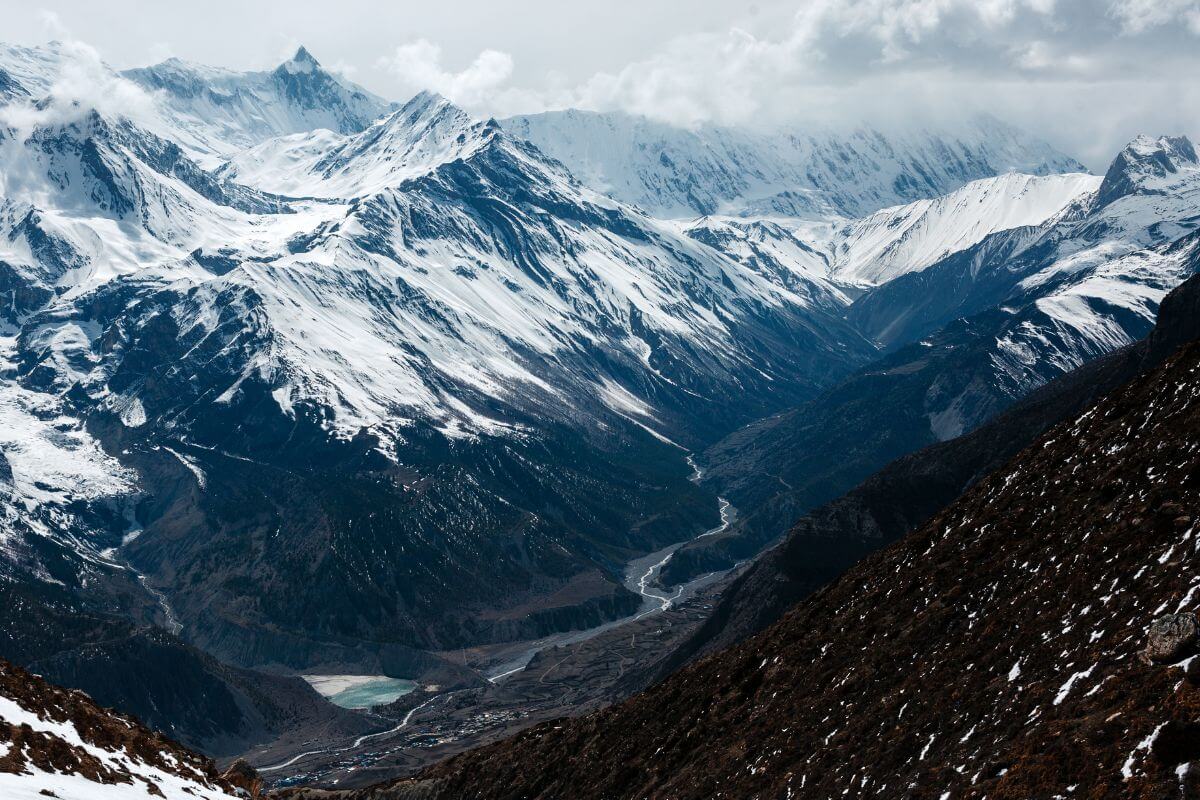
Symptoms can start mild, such as a headache or some tiredness, but if you push through them, things can escalate fast into HAPE (High Altitude Pulmonary Edema) or HACE (High Altitude Cerebral Edema), both of which are genuinely life-threatening. Thorong La Pass sits at 5,416m and is one of the most important landmarks shown on the Annapurna Circuit Trek map. Basically every trekker on this route enters high-risk altitude territory.
2. Unpredictable Mountain Weather
Conditions in the Himalayas can shift from clear skies to blizzards within hours.The Thorong La crossing is especially exposed. Afternoon winds regularly reach brutal speeds, and unseasonal snow has trapped trekkers above Thorong Phedi with almost no warning. You cannot rely on yesterday's weather to tell you anything about today.
3. Landslides and Rockfalls
The lower gorge sections near the Marsyangdi River valley run through geologically active terrain. During monsoon, saturated slopes become unstable. Rockfalls here aren't theoretical, they happen every season.
4. Dehydration and Exhaustion
At altitude, your body loses fluid faster than you would expect. Just breathing hard in dry mountain air pulls moisture out of you. Stack that on top of 6–8 hour walking days, day after day, and exhaustion builds up fast. Tired, dehydrated trekkers are way more likely to get AMS or have an accident. It snowballs.
5. Trail Accidents and Injuries
Narrow ridge paths, uneven stone steps, and sketchy river crossings mean the terrain demands attention. Ankle sprains and blown-out knees on the long descent from Muktinath to Jomsom are honestly pretty common. One moment of distraction on a loose section of trail can end your trek.
6. Wildlife Encounters
The Annapurna Circuit Trek is rich in biodiversity. The Annapurna region is home to wildlife such as Himalayan blue sheep and yaks. While rare, trekkers in forested lower sections may encounter mountain wildlife. Stray dogs in villages present a more common concern and can occasionally be aggressive.
7. Emergency Situations in Remote Areas
Between Manang and Muktinath, medical infrastructure is minimal. The nearest hospital-level care is hours away by road or helicopter. This geographic reality means that any serious medical event, whether altitude-related or otherwise, must be treated as urgent and escalated quickly.
Essential Annapurna Circuit Trek Safety Tips
The most important Annapurna Circuit trek safety tips are to acclimatize slowly, recognize AMS symptoms early, drink 3–4 liters of water daily, cross Thorong La Pass before 5:00 AM, hire a licensed guide, carry a first aid kit, train 8–12 weeks before, and get travel insurance that covers helicopter evacuation up to 6,000 m.
1. Acclimatize Properly and Follow the Climb High, Sleep Low Rule
Acclimatization is the physiological process by which the body gradually adjusts to reduced oxygen at high altitude. It involves increased red blood cell production, deeper breathing patterns, and cardiovascular adaptation. The "climb high, sleep low" rule is the gold standard acclimatization strategy used by mountaineers and trekkers worldwide.
It means ascending to a higher elevation during the day for a short hike, then returning to a lower camp to sleep. For example, trekking from Manang (3,519m) up toward Ice Lake (4,600m) before sleeping back in Manang. Above 3,000m, follow the 500m rule: your sleeping altitude should not increase by more than 500m per night.
Build in a full rest day at Manang, the standard acclimatization stop before the high-altitude push toward Yak Kharka and Thorong Phedi, allowing your body to adapt through the proper acclimatization process.
2. Recognize AMS Symptoms Early and Carry Diamox
The sooner you recognize acute mountain sickness, the easier it is to manage before it becomes dangerous. Watch for:
- Headache
- Nausea or vomiting
- Dizziness or lightheadedness
- Fatigue disproportionate to exertion
- Loss of appetite
If two or more of these show up at the same time, stop going up. Rest where you are. If things do not improve or they get worse, descend 300–500m. If you notice confusion, trouble breathing at rest, or someone who cannot walk in a straight line, that is HACE or HAPE. That is an emergency. Get down and get a helicopter.
Diamox (acetazolamide) is a prescription medication that helps your body breathe more deeply at high altitude, which speeds up adaptation. Talk to your doctor about it before you leave. It is not for everyone, it has side effects, and it is not a replacement for acclimatization. Think of it as a backup tool, not a shortcut.
3. Stay Hydrated and Drink 3-4 Liters of Water Daily
At altitude, the body loses moisture rapidly. Through faster breathing alone, you can exhale far more fluid than at sea level. Dehydration worsens AMS symptoms, reduces physical performance, and increases the risk of headaches that are easily mistaken for altitude sickness.
Target 3-4 liters of water per day, increasing toward the higher end on demanding ascent days. Signs of inadequate hydration include dark urine, dry mouth, dizziness, and declining mental sharpness.
Safe water sources on the Annapurna Circuit:
- Boiled water from teahouses (most reliable)
- Personal water filters (Sawyer Squeeze or LifeStraw are popular choices)
- Chemical purification tablets as a lightweight backup
Avoid untreated stream water, even when it looks clear. At elevation, gastrointestinal illness from waterborne pathogens will drain your energy and hydration simultaneously.
Planning your Annapurna Circuit trek? Explore expert-guided adventures with Footprint Adventure and trek with confidence from day one.
4. Cross Thorong La Pass Early and Prepare for Weather
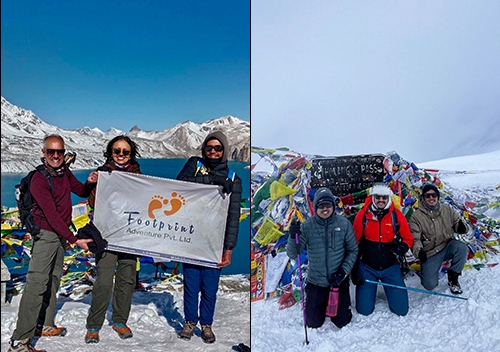
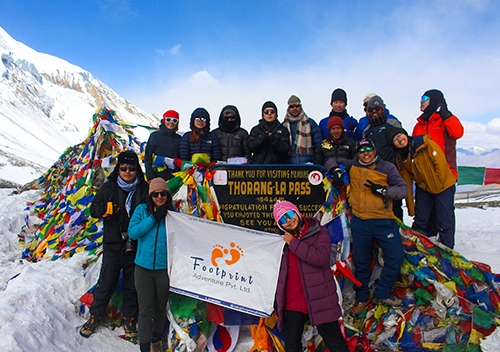
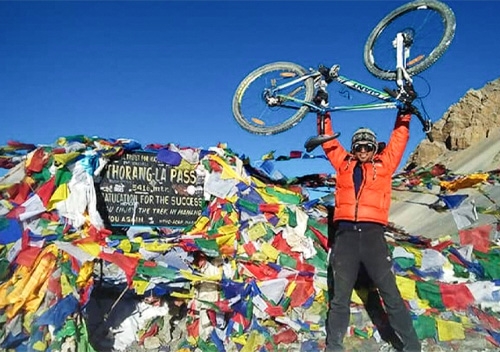
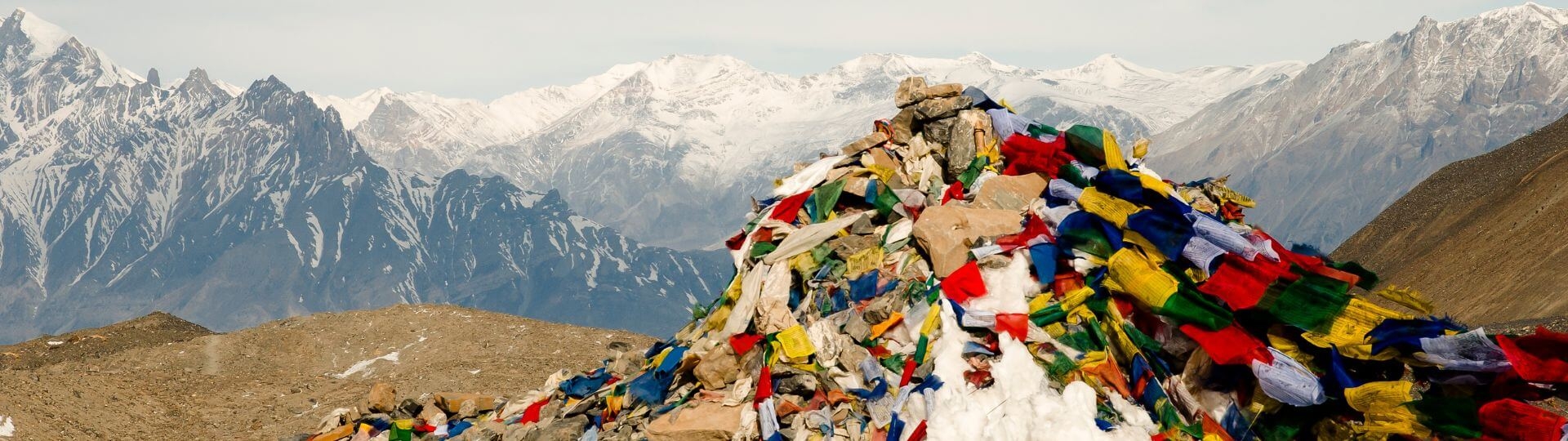
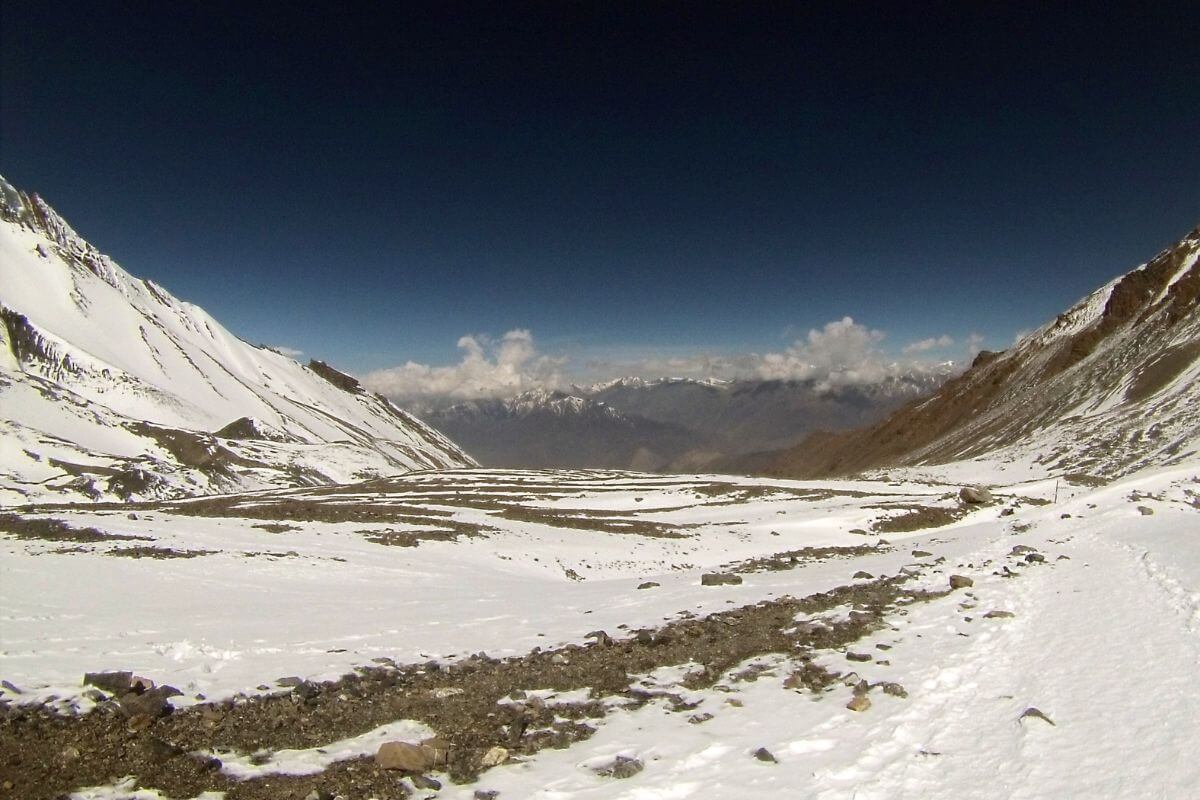
Thorong La Pass at 5,416 m is among the most famous mountain passes in Nepaland the highest point of the circuit. The standard and safest strategy is to begin the ascent from Thorong Phedi or High Camp by 4:00-5:00 AM.
Starting early serves multiple purposes: you avoid dangerous afternoon winds that regularly top 50–70 km/h, you have a buffer if the pace is slower than expected, and you reduce the window of exposure at extreme altitude. By mid-morning, conditions on the pass often deteriorate. Afternoon crossings should be considered only in exceptional circumstances.
Pack for the mountain's worst, even if the forecast looks clear. Add warm gloves, a thermal hat, and UV-protective sunglasses. At 5,400m, wind chill can drop temperatures well below what a thermometer reading suggests, and sunburn at altitude is faster and more severe than at lower elevations.
5. Hire a Licensed Guide and Porter
Since April 2023, Nepal requires foreign trekkers in the Annapurna Conservation Area to hire a licensed guide. This regulation exists for safety reasons, and those reasons are well-founded. These regulations are part of the updated Nepal trekking rules introduced to improve trekker safety.
A licensed guide provides:
- Navigation support: They know every junction, every shortcut, every weather pattern
- Real-time health monitoring: Experienced guides recognize early altitude sickness signs before you do
- Emergency coordination: If something goes wrong, they know who to call and how to coordinate a helicopter evacuation fast
- Local knowledge: They get real-time updates on trail conditions that no app has access to
Porters carry your heavy gear, letting you conserve energy for the altitude. This is a practical safety measure, not just convenience. Fatigued trekkers make poor decisions and are more prone to injury.
6. Carry a Personal First Aid Kit
Trekking companies and teahouses stock basic supplies. In a remote stretch between villages, your own kit is what you've got. Keep it compact but don't cut corners on the essentials. A compact kit for the Annapurna Circuit should include the following:
- Blister treatment,
- Pain relief,
- Diamox,
- Paracetamol,
- Stomach med, and
- Wound care,
7. Train and Prepare Your Body Before the Trek
Showing up fit and following the right trekking preparations for Nepal makes this trek fundamentally different. Start training at least 8-12 weeks out:
- Cardio base: Hike, run, or cycle regularly and gradually increase the distance and elevation.
- Leg strength: Use squats, lunges, and stair climbing. Your knees and quads take a beating on steep descents.
- Loaded carries: Train with the actual pack you will use, not a lighter version.
Before you leave, get a proper medical checkup. And if you have any pre-existing heart, lung, or blood pressure issues, get specific guidance. These conditions need careful management at high altitude.
8. Get Comprehensive Travel Insurance
Travel insurance is not optional on the Annapurna Circuit and should be included when planning a trek in Nepal. A helicopter evacuation from Thorong La or Manang can cost USD 3,000-6,000 or more. Without coverage, this expense falls entirely on the trekker.
Your policy must specifically include:
- Helicopter evacuation coverage up to at least 5,500-6,000m altitude
- High-altitude medical expenses
- Emergency medical transport
- Trip interruption or cancellation
Read the fine print. Many standard travel policies exclude high-altitude activities. Look explicitly for policies that list trekking above 4,000m or Himalayan trekking as covered activities.
What to Do in an Emergency on the Annapurna Circuit Trek
Stay calm, act fast, and know your options before you need them. The trekkers who handle emergencies well aren't the ones who panicked less. They are the ones who already knew what to do.
When Is Helicopter Evacuation Necessary?
Helicopter evacuation should be arranged without delay in any of the following situations:
- Severe AMS that does not improve with descent and rest
- HAPE (High Altitude Pulmonary Edema): Breathlessness at rest, pink or frothy cough, gurgling sound in chest
- HACE (High Altitude Cerebral Edema): Confusion, inability to walk in a straight line, loss of consciousness
- Serious injuries such as fractures, head trauma, or severe sprains that prevent walking
When in doubt, descend and evacuate. The risk of waiting always outweighs the cost of acting.
Learn more about our team and discover the passion, local knowledge, and commitment behind every trekking experience we create.
Medical Facilities Along the Route
You won't find a hospital around every corner on the Annapurna Circuit, but there are a few key stops worth knowing before you hit the trail.
Location | Elevation | Facility |
Chame | 2,710m | Basic health post |
Manang | 3,540m | Himalayan Rescue Association (HRA) aid post (seasonal) |
Jomsom | 2,700m | Hospital with emergency capabilities |
The Himalayan Rescue Association (HRA) post in Manang established in 1981 A.D. is particularly important. Staff there provide free altitude sickness consultations and can advise whether proceeding to the pass is medically advisable.
Important Emergency Contacts
No matter how well you plan, the unexpected can happen in the Himalayas. These emergency contacts cover everything from medical rescue to police assistance. Screenshot this page before you leave.
Organization | Contact |
Tourist Police (Nepal) | Dial 1144 (Toll Free, Hot line) +977-01-4247041 |
Nepal Police Emergency | 100 |
Footprint Adventure | +977-9851221603 |
TAAN (Trekking Agencies' Association of Nepal) | +977-1-4540920 |
Department of Immigration, Nepal | +977-1-4529660 |
Himalayan Rescue Association (HRA) | +977-1-4540292 |
A safe trek starts with the right team. Our licensed guides are trained in emergency situations. Trek with Footprint Adventure for professional support throughout your Annapurna Circuit Trek journey.
Annapurna Circuit Trek Season: When Is It Safe to Go
The Annapurna Circuit Trek is safest during two main trekking seasons: post-monsoon (September–November) and pre-monsoon (March–May).
Post-monsoon (September–November) is widely considered the best season. Skies are clear, mountain views are spectacular, trails are dry, and Thorong La Pass is reliably accessible. October in particular offers the most stable weather window of the year.
Pre-monsoon (March–May) offers warmer temperatures and the spectacle of rhododendron blooms in lower elevations. Weather is less predictable than in autumn, with some cloud build-up and occasional afternoon snow above 4,000m, but the pass remains crossable for well-equipped trekkers.
Winter (December–February) is cold, and the pass may be blocked by snow, but it is achievable with proper gear and experienced guidance.
Monsoon season (June–August) brings heavy rain, active landslide zones, and poor visibility. Completing the circuit in this period requires specific expertise and heightened caution.
Choosing the best time to trek in Nepal can greatly improve trail conditions and mountain visibility. Footprint Adventure has guided treks across all four seasons and can advise on current trail conditions, pass status, and seasonal gear requirements for any departure window.
How Footprint Adventure Helps You Stay Safe on the Annapurna Circuit Trek
Safety on a high-altitude trek is not just about what you carry. It's about who's guiding you matters just as much. Footprint Adventure provides end-to-end support designed specifically for the demands of the Annapurna Circuit:
- Licensed and experienced guides who know the route, the risks, and emergency protocols
- Daily altitude monitoring with pulse oximeter checks and symptom tracking at every camp stop
- Acclimatization itineraries are designed around the 500m rule, with mandatory rest days built in rather than squeezed out.
- Emergency coordination when it matters includes helicopter arrangements and medical contacts, with everything handled fast.
- Real-time local updates on trail conditions, teahouse availability, and weather provide the information that does not show up on any app.
- Weather briefings before the Thorong La crossing to ensure you depart with real information
- Customized trek planning considering your fitness level, pace preferences, and health history
Whether it's your first Himalayan trek or your fifth, having a professional team behind you is the single most effective risk-reduction measure available.
Final Thoughts
The Annapurna Circuit remains one of the world's great trekking experiences, a route that offers not just physical challenge but genuine cultural immersion, extraordinary mountain scenery, and the satisfaction of crossing one of the highest trekking passes on Earth (Thorong La Pass). The risks outlined in this guide are real, but every one of them is manageable with the right preparation.
Nepal's trekking infrastructure continues to improve. Better trail signage, expanded HRA services, and mandatory guide regulations all contribute to a safer environment than existed a decade ago. As a trekker, your responsibility is to meet that improving infrastructure with equal preparation. Follow these Annapurna Circuit trek safety tips, invest in quality insurance, and let the mountain reward your respect for it with an experience you will carry for a lifetime.
Have questions about altitude, permits, or trek planning? Contact us and get personalized planning and advice from local Annapurna trekking experts of Footprint Adventure team.
FAQs on Annapurna Circuit Trek Safety Tips
Is the Annapurna Circuit Trek safe for beginners?
Yes, the Annapurna Circuit trek is safe for beginners with proper preparation. Beginners should allow extra acclimatization days, hire a licensed guide, and build cardiovascular fitness at least 8–10 weeks before departure.
How common is altitude sickness on the Annapurna Circuit?
AMS symptoms are reported by an estimated 30-50% of trekkers above 4,000m in some form. Severe cases requiring evacuation are less frequent but occur every season.
Do I need travel insurance for the Annapurna Circuit Trek?
Yes, travel insurance is mandatory for the Annapurna Circuit. You must show proof of coverage when obtaining your TIMS card and ACAP permit
Is Thorong La Pass dangerous?
Yes, Thorong La Pass is basically dangerous, as it carries real risks from altitude, cold, and sudden weather. Starting the crossing before 5:00 AM and carrying layered clothing minimizes these significantly.
Should I hire a guide for the Annapurna Circuit Trek?
Yes, and as of April 2023, it is legally mandatory for foreign trekkers in the Annapurna Conservation Area. Guides provide navigation, health monitoring, and emergency support.
How much water should I drink during the trek?
You should drink 3-4 liters per day, using boiled water, a personal filter, or purification tablets. Increase intake on heavy ascent days.
What should I do if I get AMS symptoms?
If you get AMS symptoms, stop ascending immediately. Rest at your current elevation. If symptoms persist or worsen after 12–24 hours, descend 300–500 m. Seek medical attention at the nearest HRA post or health facility.
Is the Annapurna Circuit Trek Safe?
Yes, the Annapurna Circuit Trek is safe for most trekkers who acclimatize properly, trek with a licensed guide, monitor altitude sickness symptoms, carry travel insurance, and avoid risky weather conditions. The biggest dangers are AMS, sudden weather changes, dehydration, and injuries near Thorong La Pass.