What to Pack for Annapurna Circuit Trek: Complete Packing List & Gear Guide for 2025/2026
What to Pack for Annapurna Circuit Trek: Complete Packing List & Gear Guide for 2025/2026
Modified on Dec 2, 2025
Hiking the Annapurna Circuit is among the most enriching trips in Nepal. The trek takes you through beautiful landscapes, rugged mountain passes, terraced fields, and traditional mountain villages. Trekking at such high altitude is not just about enjoying the scenery; it's also about being well prepared.
Imagine this, you arrive at the cold village or you reach the high pass and realize you are not adequately warm or that you packed heavy and unnecessary items all day. It can quickly make the trek feel long and miserable. This is why having a thoughtful packing list for Annapurna Circuit trek is crucial for every trekker.
Knowing what to pack for the Annapurna Circuit trek will prepare you to be comfortable, safe, and well-organised. The right clothing, a good pair of hiking boots, proper and necessary gear, and other personal items will absolutely pay off on long trekking days.
A comprehensive Annapurna circuit gear list ensures that you have the things you need without having to carry any unnecessary weight. Weather and altitude can change quickly, so referring to a comprehensive Annapurna Circuit packing list can help you be prepared for a cold night, unexpected rain, or strong wind. You can easily buy trekking gear in Kathmandu once you are here in Nepal, so there is no need to carry a lot from home.
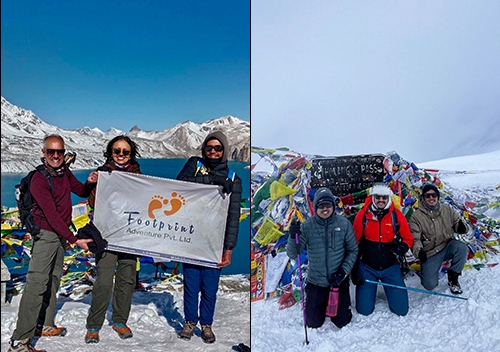
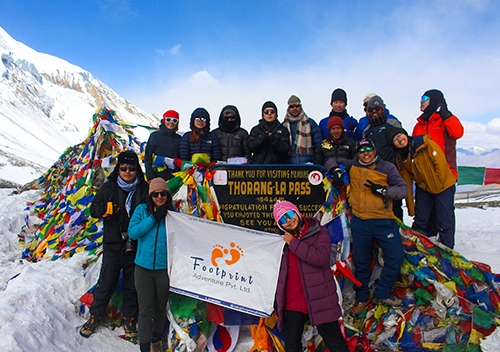
Trekker in insulated jacket and boots crossing Thorong La Pass
Whether you are a first-time trekker or an experienced hiker trekking the Annapurna Circuit, a detailed Nepal Annapurna Circuit packing list guides you on what to bring and what to leave behind. It balances safety, comfort, and convenience so you can focus on the breathtaking landscapes and local culture.
This Annapurna packing guide includes everything you will need to prepare for the Annapurna Circuit trek. It includes a variety of items for clothing, gear, electronics, health, and other essentials. With proper preparation, you will enjoy every moment, cross high passes with ease, and make your journey on the Annapurna Circuit safe, comfortable, and memorable.
Table of Content
Seasonal Packing Tips for the Annapurna Circuit Trek
Autumn Packing List for Annapurna Circuit (September – November)
Because of its low precipitation, autumn is the most favorable time for trekking on the Annapurna Circuit after the monsoon season has ended. There is less chance of cloudy skies or fog obscuring views. Additionally, the temperature is generally stable. On average during the day, temperatures can range from 10-20° Celsius during the day time at mid elevations, while temperatures will be much colder at night and above the 3000 meter elevation it will be close to zero, or below, at night. Wearing layers will keep you comfortable during warm days and cold evenings.
Must carry items: thermal base layers, fleece jacket, lightweight down jacket, waterproof and windproof shell jacket, warm fleece hat.
Consider: A lightweight down jacket for cold nights, while a fleece and shell is usually enough for daytime trekking. Focus on staying warm and protected from wind at higher altitudes.
Spring Packing List for Annapurna Circuit (March – May)
Springtime in the Annapurna Circuit has a combination of warm sunny days, mild temperatures, and occasional rainfall. The Rhododendron trees start to blossom, and temperatures can fluctuate dramatically. Typically during daytime at mid-elevations, the average temperature ranges from 12 to 25°C. During the evening, due to altitude, temperatures will fall between 0 and 10°C depending on your location. Because the weather shifts throughout the day, wearing layers that you can easily add or remove is the best way to stay comfortable.
Must carry items: moisture-wicking base layers, a fleece jacket, breathable trekking shirts, a good rain jacket, and rainproof trekking pants.
Consider: convertible trekking pants for warmer afternoons and a sun hat to protect from strong UV at higher altitudes. Focus on choosing versatile layers that are easy to add or remove as temperatures change.
Complete Annapurna Circuit Trek packing list with essential gear categories
Winter Packing List for Annapurna Circuit (December – February)
Winter on the Annapurna Circuit is very cold, and temperatures often fall far below freezing. At lower elevations, temperatures are usually between -5 and -10 degrees Celsius. In the high mountains, including areas near Thorong La Pass which is among the famous mountain passes in Nepal, temperatures can drop to between minus fifteen and minus twenty-five degrees Celsius with wind chill. Snow, ice, and strong winds make winter trekking challenging, so carrying proper winter gear is necessary.
Must carry items: a heavy insulated down jacket, thick thermal base layers, warm winter trekking pants, a thick fleece or soft shell jacket, insulated gloves or mittens, and a balaclava or face mask.
Consider: full winter trekking equipment is required for safety. This includes an insulated winter shell, waterproof pants, winter gloves or mittens, a balaclava, microspikes or crampons for icy trails, insulated boots, and gaiters.
Essential Trekking Gear for the Annapurna Circuit
Right Backpack and Daypack for the Annapurna Circuit Trek
The Annapurna Circuit trek will last about 13 days; therefore, you want the right backpack.
Backpack for Multi-Day Trekking: A backpack in the range of 50–65 litres is an appropriate size for the Annapurna Circuit trek. The weather in Nepal changes quickly, so select a backpack made of water-resistant fabric or at least one that has a rain cover. The lighter the backpack is, the easier it will be to carry your gear comfortably over long distances.
Daypack for Day Essentials: Bring along a small daypack of 20–30 litres for your day-to-day items, such as water, snacks, sunscreen, camera, and rain jacket. Look for your daypack to have good waist support and back support and side pockets for easy access to whatever items you will need.
If You Hire a Porter: Most treks in Nepal have porter support. One porter carries the luggage for every two trekkers, a maximum of 12 kg per trekker in a duffel bag (65–90 litres). If you have porter support, you will just want a small daypack (30–45 liters) for your hiking daily essentials.
Additional Tip: Use packing cubes to keep your belongings organized, and use dry sacks or plastic bags to protect your electronics and valuables from rain or moisture.
Trekking Poles and Sleeping Bag for Annapurna Circuit
The trails of the Annapurna Circuit are often rocky and uneven which makes trekking poles very essential to to lessen the stress on your knees and improve balance.
When purchasing trekking poles, look for a lightweight and adjustable pair so that you can shorten or lengthen them depending on the incline, and make sure it has a comfortable grip and wrist straps to hold it securely. You can also easily buy trekking poles in Kathmandu or Besisahar for around $12-$16 for a pair when you arrive.
A winter sleeping bag rated –10°C to –15°C is recommended because the nights are quite cold on the Annapurna Circuit. Teahouses do offer blankets, but they are not always warm enough, especially at higher altitudes. A quality sleeping bag will keep you warm enough for comfortable sleep, and a sleeping bag liner makes the bag warmer and more hygienic. You could also rent a sleeping bag for $2 per day in Kathmandu, if you don't want to buy one.
Clothing Essentials for Annapurna Circuit Trek
Base Layers: Moisture-Wicking Clothes for Annapurna Trek
For the Annapurna Circuit, select a moisture-wicking base layer, both thermal top and bottom made of merino wool or high-quality synthetic materials. They pull sweat away from your skin and will help keep you warm and comfortable in varying conditions. Do not choose cotton, as it traps moisture and will make you feel cold.
Pack 2-3 sets of base layers. Use one for trekking, one for sleeping, and keep one extra as a backup. You will especially need these warm layers during high altitude nights and cold trekking days.
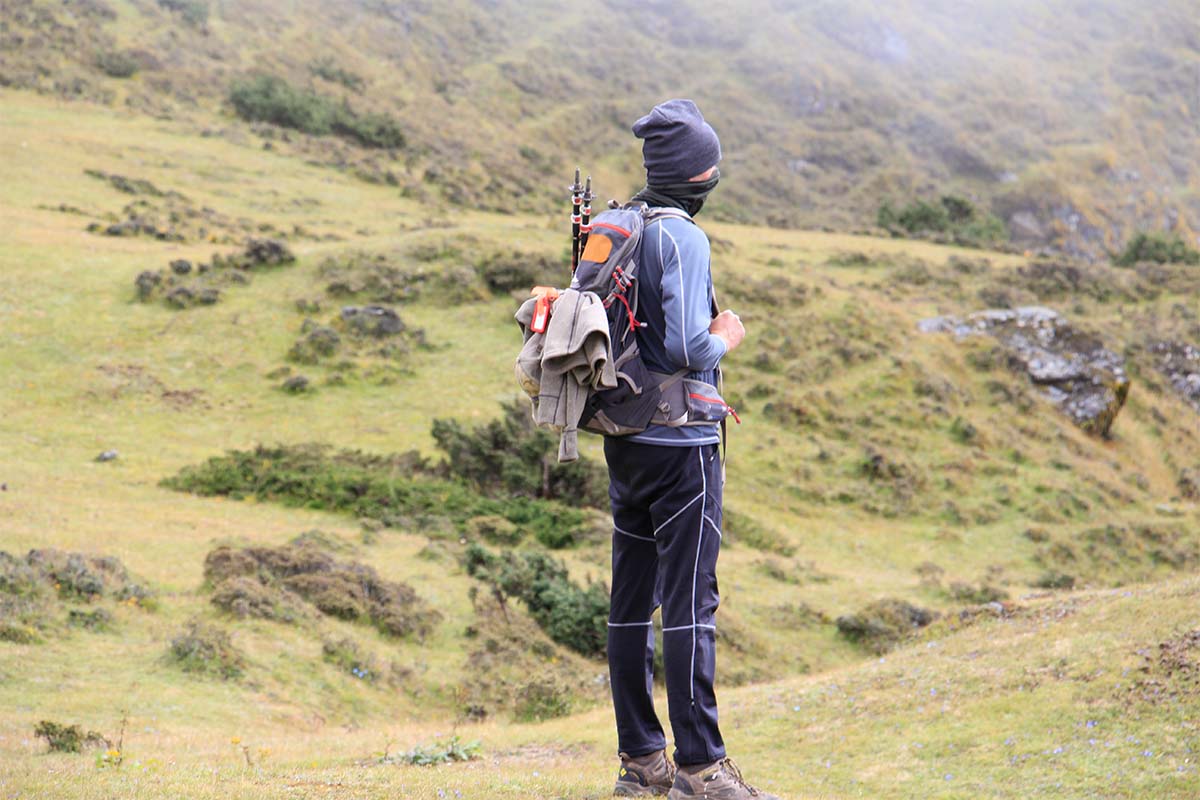
A trekker with a backpack and trekking poles looking out over the alpine mountains of Annapurna.
Insulating Layers: Fleece and Down Jackets for Annapurna Trek
For the Annapurna Circuit Trek, it is important to bring a fleece jacket as well as a down jacket for effective layering. A fleece acts as a mid-layer for warmth throughout the day, while a high-fill-power down jacket keeps you warm at high altitudes during cold conditions and in the evening. Wear a base layer under your fleece jacket, and then add your down jacket once it gets colder. You can also buy fleece and down jackets in Thamel, Kathmandu, where the price will vary based on the quality of the product.
Outer Layer / Shell: Waterproof and Windproof Jackets
It is crucial to have a waterproof and windproof shell jacket as an outer layer to protect you from rain, wind, and snow that you may encounter at any time on the Annapurna Trek. The shell jacket should be a hard shell made of a breathable fabric (like Gore-Tex or similar) with a hood and enough space to fit over your insulating layers. Bring a quality shell jacket for the entire trek.
Footwear for Annapurna Circuit Trek: Boots, Camp Shoes & Sandals
You will want a good pair of sturdy, waterproof trekking boots with good ankle support. Make sure you break your boots in before your trip, so you do not end up with blisters. Lightweight trail running shoes are good for the easier sections of the trail. Consider cozy, insulated camp shoes for the evenings at the teahouses; regular sandals are not recommended; your feet could get cold at altitude. Popular and reliable trekking boot options for the Annapurna Circuit trek include Salomon X Ultra, Merrell Moab, La Sportiva TX Series, and Scarpa Kailash.
Tip: Be sure to take care of your feet and keep them dry every day. Change into dry socks whenever possible, air your feet out during breaks, and use some foot powder or a little bit of Vaseline to minimise friction. Let your boots dry in the teahouses, but keep them away from direct heat.
Accessories: Hats, Gloves, Socks, and Buffs for High Altitude Trekking
Carry a sun hat with a wide brim for daytime sun protection and one warm wool or fleece hat for cold morning and night temperatures. Take waterproof gloves with a warm liner to protect your hands from the cold at higher elevations. Bring three to four pairs of synthetic or wool blend hiking socks because they dry quickly, which helps prevent blisters. Finally, bring one buff, neck gaiter, or equivalent for protection against sun, wind and dust along the trail.
Toiletries & Hygiene Essentials for Annapurna Trek
It is best to pack lightweight and functional toiletries. Since shower facilities are limited at higher altitudes, and the environment is sensitive, try to choose biodegradable and eco-friendly products whenever possible.
Toothbrush and Toothpaste: A small toothbrush and a mini tube are all you need. One tube is normally enough for the whole trek.
Quick-Dry Towel: A small and light, microfiber towel. One is enough.
Biodegradable Soap/Body Wash: You should pick eco-friendly, mini travel soap to minimize the impact on the planet. One small bottle or bar is all you need.
Biodegradable Shampoo: Shampoo sheets or a small bottle of biodegradable shampoo. One small container is enough.
Wet Wipes / Travel Wipes: These are essential on all the days when there is no hot water. You can gauge how many that you need, maybe one or two packs properly sized for your use.
Hand Sanitizer: Additionally, bring a small bottle of travel hand sanitizer. You will want to use this before meals and after you go to the toilet.
Toilet Paper: You should carry 4 or 5 rolls of toilet paper packed in a waterproof bag as tea houses may not have any toilet paper for your use.
Sunscreen: Sunscreen high SPF (30+) cream or lotion. One small bottle of 100 ml is good for the trek.
Deodorant: Travel-size roll-on or stick.
Feminine Hygiene Products: Carry an adequate number of tampons, sanitary pads, or a menstrual cup.
Nail Brush & Clippers: You could include these items, though they are small and lightweight and optional but a useful tool to have.
Useful Tip: A lightweight, waterproof toiletry bag will keep your bathroom items organized and prevent leaks. You can also transfer liquid products like shampoo and body wash into smaller travel-size bottles to minimize weight. Always carry a sealable bag for your waste, especially wet wipes and toilet paper, until you can dispose of them properly.
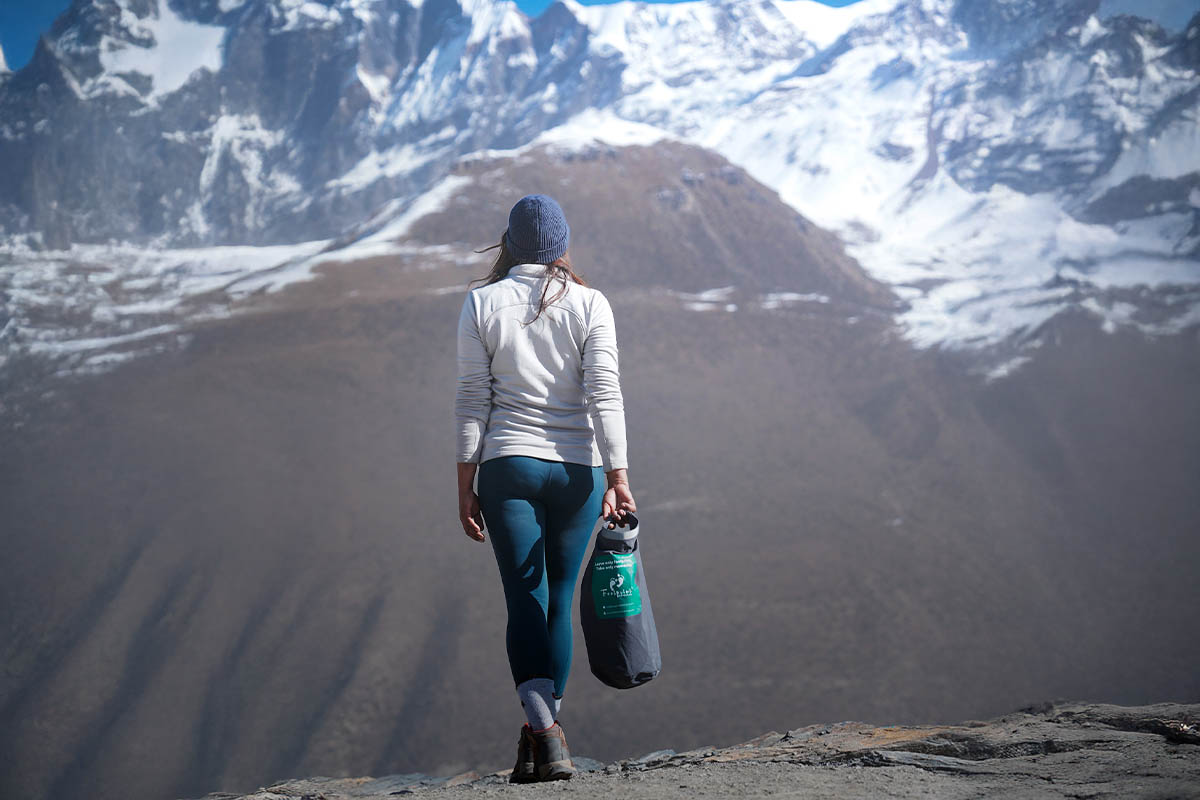
At Footprint Adventure, we provide carry me bags to carry your own waste down the trail, as proper waste management is limited along the Annapurna Circuit, and we aim to help trekkers minimize their environmental impact.
A hiker carrying a Footprint Adventure's Carryme bag, standing at a high-altitude glacier viewpoint in Annapurna.
First Aid & Health Essentials for Annapurna Circuit Trek
It is important to have a personal first aid kit with regular prescription medications (including medication for altitude sickness if prescribed), and basic health and hygiene supplies. Essential first aid supplies would include: bandages, antiseptic wipes, blister plasters, pain medication, anti-diarrhea medication, allergy medications, and personal prescription medications. Protect yourself with sunscreen, SPF lip balm, insect repellent, sunglasses, and water purification. For hygiene, include biodegradable soap, hand sanitizer, wet wipes, and a small towel.
Helpful Information: Each of our guides are wilderness and first aid trained so you can have peace of mind while trekking the Annapurna Circuit. Our guides carry all of the appropriate first aid supplies and use an oximeter to monitor your health to keep track of your oxygen levels during high altitudes. They also assist in the management of altitude sickness as well as other general trekking health concerns, to ensure you are safe, comfortable, and healthy during the trek.
Electronics and Navigation Tools for Trekking the Annapurna Circuit
The electronics you'll need for this trek are a power bank, your camera, a headlamp and spare batteries. Along the trail, electricity is limited, so most charging is done using solar power, and it usually costs about 300–500 NPR per hour, depending on the altitude. For Annapurna Circuit trek map and navigation, bring a smart phone with offline maps like Maps.me or Gaia GPS. For even more accurate navigation, consider bringing a dedicated GPS device, which offers features like live tracking or backtracking. Finally, you can always take paper maps and a compass for reliable backup navigation.
Helpful Tip: Keep batteries warm by storing devices close to your body, as cold drains them quickly. Charge your devices whenever electricity or solar power is available, and pack only essential, lightweight, and durable electronics to reduce unnecessary weight.
Food, Snacks, and Hydration for Annapurna Circuit Trek
On the trek, eat meals that are rich in carbohydrates and high in protein, such as dal bhat, noodles, and soups, to maintain energy levels. Bring snacks that are high in energy, such as nuts, dried fruits, and energy bars that can provide energy between meals.
Staying hydrated is also important, so we would recommend drinking about 3 to 4 liters of water a day. You can either use a water filter or purifying tablets to give you access to clean water. You can also bring electrolyte powders or consume teas like ginger or masala tea to help with hydration and support your body at high altitude, as your body tends to lose more fluid at high altitude. Once you get higher up, snacks become more expensive and harder to find, so it is a good idea to bring enough with you from Kathmandu prior to the trek.
Travel Documents, Permits, and Money for Annapurna Circuit Trek
Travel Documentation
Passport: Your passport must have at least 6 months' validity from your date of entry. You should take the original and one photocopy.
Visa for Nepal: Make sure your visa is valid for the whole duration of the trek. The Entry Travel Authorization (ETA) can be best applied for online.
Passport-sized Photos: You will need two current photographs for the permits. It is possible to take photographs in some offices for a fee, but it is best to have your own handy.
Permits
ACAP (Annapurna Conservation Area Permit): Costs about NPR 3,000 (USD 22) and is required to enter the conservation area.
TIMS (Trekkers’ Information Management System) Card: Costs about NPR 2,000 for solo trekkers or NPR 1,000 if trekking with a guide; this ensures safety registration.
How to obtain permits: Permits can be obtained in Kathmandu or Besisahar at the Nepal Tourism Board office, or through your trekking agency.
Money
Cash is essential: Carry enough Nepalese Rupees for permit fees and daily expenses, as many teahouses and permit offices do not accept cards.
On-the-Trail Budget: Plan around USD 25 to USD 30 per day for food and lodging.
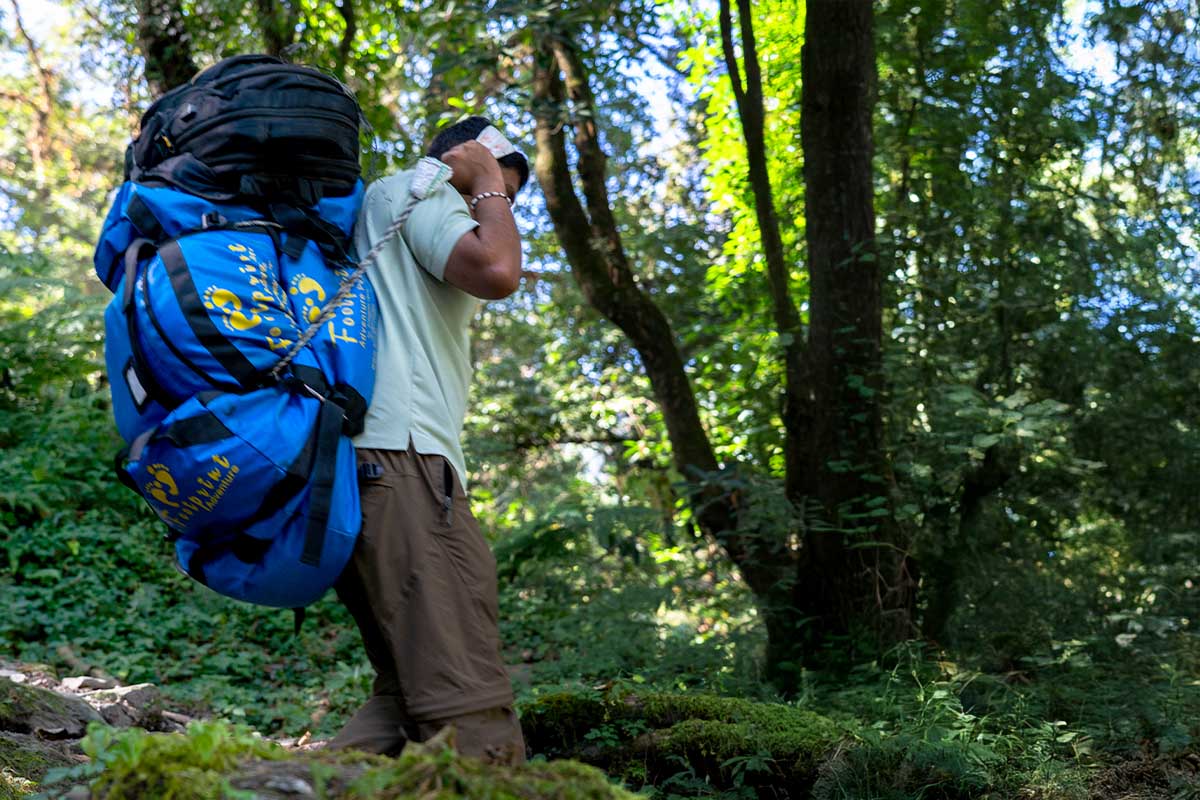
Porter carrying Footprint Adventure's duffle bag through forested Annapurna trail
Optional but Useful Items for Annapurna Circuit Trek
Sleeping bag liner: Keeps your sleeping bag clean and provides extra warmth.
Trekking poles: Lightweight and collapsible, providing stability on rough terrain.
Daypack cover: Protects your daypack and its contents from rain.
Binoculars: Observe wildlife or scenery from a distance without disturbing nature.
Crampons: Essential for icy or snowy conditions in winter.
Biodegradable soap: Alternative for washing that is friendly to the environment.
Toilet paper and tissues: It may not be provided in teahouses.
Wet wipes and hand sanitizer: Useful when hot showers are unavailable.
Quick-dry towel: Lightweight and cool air will dry out quickly.
GPS device or map: Provides peace of mind if you wander off the beaten path or out away from your teahouse
Headlamp: Important for early starts, walking in the dark, or finding your way around the teahouse at night.
Water purification tablets: Backup option for making water clean to drink.
Pro Packing Tips for a Safe and Comfortable Annapurna Circuit Trek
Pack light but smart, carrying only essentials while ensuring all critical gear, clothing, and electronics are included.
Use packing cubes and dry sacks to organize clothes, toiletries, and electronics.
Place heavier items like sleeping bags and down jackets close to your back and near the center to maintain balance.
Store frequently used items such as snacks, water, or rain gear in accessible side or top pockets.
Layer clothing: moisture-wicking base layers, insulating layers like fleece or down jackets, and a waterproof shell.
Bring well-broken-in trekking boots, warm socks, and foot powder to prevent blisters.
Protect devices in waterproof bags.
Keep batteries warm close to your body to prevent them from draining in the cold.
Carry high-energy snacks from Kathmandu, as prices rise at higher altitudes.
Bring a reusable water bottle or hydration bladder and purification tablets or a filter to stay hydrated.
Carry sufficient Nepalese Rupees, as many teahouses and permit offices do not accept cards.
Include a personal first aid kit, medications, and hygiene essentials.
Monitor your health, especially for altitude sickness.
Make use of guides who are first aid trained and carry emergency equipment.
Carry out your waste using provided bags and avoid single-use plastics.
For navigation, carry a smartphone with offline maps, a GPS device, and a paper map as reliable backups.
Conclusion
Packing for the Annapurna Circuit Trek should be done according to your needs as well as the weather and altitude conditions. Having the correct attire, equipment, and appropriate supplies will protect you from changing weather and from injury, while allowing you to pack efficiently and be prepared. For successful trekking in the Himalayas, there are several essential items to consider like durable hiking footwear; comfortable layered clothing; a waterproof gears/sleeping bag; insulated sleeping bags; high-energy food and snacks; water purification tablets or filters; and basic first aid supplies. Having these items will help ensure your health while you are on the trail.
The change in the seasons should also be considered when creating packing lists for Annapurna Circuit trek. If you plan on hiking during the autumn, winter, or the spring, the choices for your packing lists will need to vary from one season to the next. Trekkers who plan in advance and pack wisely will have an enjoyable experience filled with amazing scenery, unique cultural experiences, and countless amazing moments.
Frequently Asked Questions
What is the ideal backpack size for the Annapurna Circuit Trek?
A 50L-65L backpack is good for a full trek as it will allow you to carry all of your clothes, a sleeping bag and other essentials. If you hire a porter, you only need a small daypack of 20–30 liters for water, snacks, camera, and other items you need during the day.
Do I need crampons for crossing Thorong La Pass?
Most trekkers won’t require crampons when trekking through the fall (September-November) or spring (March-May); the trail will typically be clear of snow and ice. Crampons are only needed in winter or if there is snow and ice on the trail.
Can I buy trekking gear along the Annapurna Circuit?
Basic equipment such as trekking poles, jackets and gloves can easily be found in Kathmandu, Pokhara and Besisahar. Prices will be higher in remote villages; it’s best to bring important items from home or from Kathmandu.
How cold does it get at high altitudes on the ACT?
The Annapurna Circuit has fluctuating temperatures depending on the altitude and season. During autumn and spring, at elevations above 3000m, nighttime temperatures can drop to nearly 0°C; daytime temperatures can range from 10°C to 25°C. For the winter months, high-altitude passes (like Thorong La) could sometimes have temperature drops of -15°C and below. A layered clothing approach for warmth is advisable.
How much cash should I carry on the Annapurna Circuit?
Carry enough Nepalese Rupees for food, tea house accommodation, snacks, and permits. On average, USD 25–30 per day is enough. Most places do not accept cards, especially in remote villages.
Can I trek the Annapurna Circuit without a guide?
The Annapurna Circuit requires all trekkers to register for a permit; therefore, it is not possible to trek the circuit solo. You must have either a guide or registered. First-time trekkers are encouraged to hire a guide for their trek due to the many benefits they provide, including helping with navigation, obtaining permits, ensuring your safety, and helping you manage altitude sickness.
What snacks are recommended for energy on the trek?
Carrying lightweight, high-energy snacks like nuts, dried fruits, energy bars, and chocolate provides you with convenience, as they have a higher energy per weight ratio than most other foods; are easily transportable; and are less expensive if you purchase them in Kathmandu instead of at higher elevations on the Annapurna Circuit.
Aayushma Bhandari
Aayushma Bhandari is currently pursuing her Bachelor's degree in Travel and Tourism. She began her journey as an intern at Footprint Adventures, where she is now actively writing content and blogs. She loves exploring the diverse regions of Nepal, immersing herself in its stunning landscapes and rich cultures. Her trekking experiences give her unique insights, which she shares through her writing, helping others discover the beauty of Nepal's trekking routes and local traditions. Looking ahead, Aayushma is excited to grow with the team at Footprint Adventures. She values the chance to learn from industry professionals and is eager to contribute to the field of tourism and travel.

.jpg)
.jpg)